

TILED ROOFING
Tiled Roofing and Roof Tile Replacement in Surrey
Clay, concrete and natural slate laid properly on new battens and membrane. Whether you need a handful of tiles matched and replaced or the whole roof stripped and re-tiled, we can look at it and price it.
What makes a tiled roof last
Most homes across Surrey, Middlesex and London sit under a tiled pitched roof, and a well laid one will last for decades. The tiles are only half the job. What holds them up, keeps water out and lets the roof breathe matters just as much. GB Roofing has been tiling and slating pitched roofs for many years.
Clay, concrete and natural slate
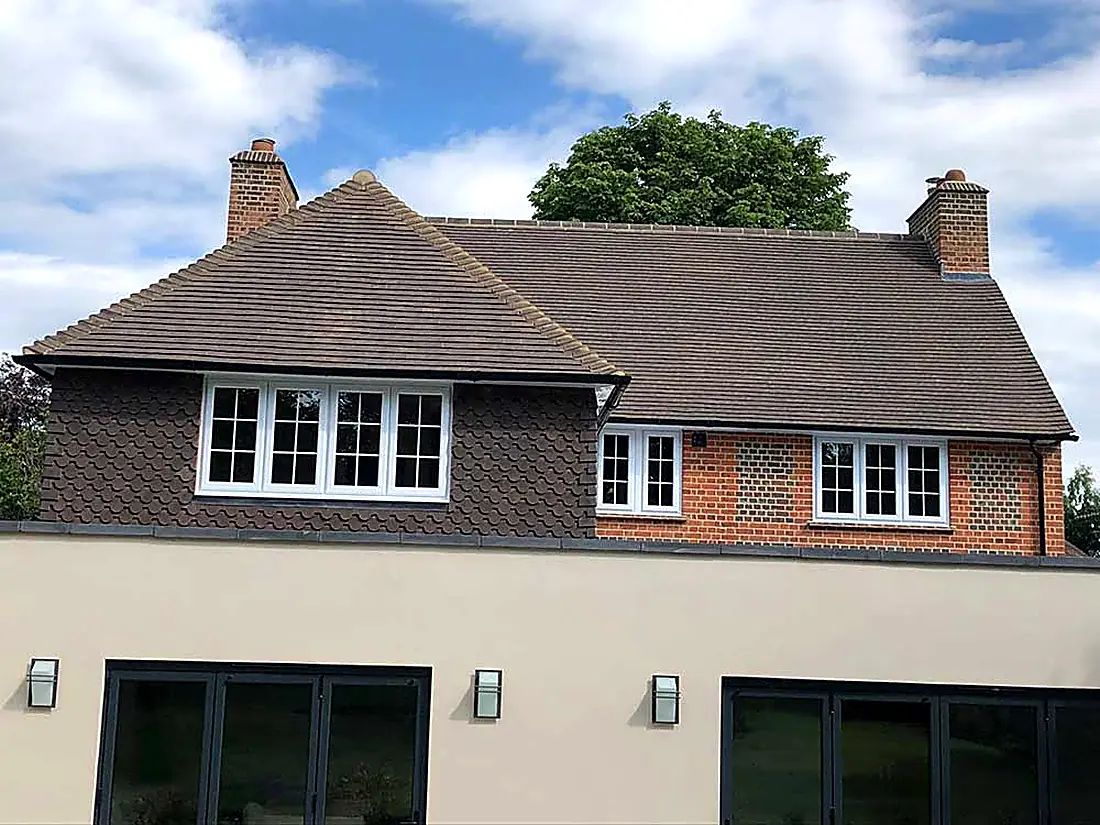
Three materials cover almost every pitched roof we work on. Clay tiles are the traditional choice on older properties. They hold their colour, they weather well and they last a very long time, though they cost more and older handmade ones vary in size from tile to tile. Concrete tiles took over from the 1950s onward and sit on most post war housing. They are heavier, cheaper and come in a huge range of profiles.
Natural slate is the smartest looking of the three and the most demanding to lay. Each slate is holed and nailed individually, so a slate roof takes longer than a tiled one. Laid properly it will see out a century. Fibre cement slates are a cheaper stand in that reads much the same from the ground.
- Clay plain tiles and clay pantiles, handmade or machine made
- Concrete plain tiles and concrete interlocking tiles
- Natural slate, including Welsh and Spanish
- Fibre cement slate where the budget will not stretch to natural
- Matching ridge, hip, verge and valley tiles
Plain tiles or interlocking tiles
A plain tile is small, flat and laid in a double lap, so every part of the roof has two or three thicknesses of tile over it. It looks right on period properties and on steep roofs. It also takes a lot of tiles, roughly sixty to the square metre, which means more weight on the structure and more labour.
Interlocking tiles are larger and have a groove down each side that locks into the next tile. Around ten of them cover a square metre, so they go on faster and cost less. Most concrete roofs from the last seventy years are interlocking. Neither type is better in the abstract. What suits your roof depends on the pitch, the look of the street and what the timbers below will carry.
TILE OR SLATE
Clay, concrete or natural slate
Three materials cover almost every pitched roof around Surrey, and they behave very differently once they are laid.
Clay tiles
The traditional covering on older property, and the one that ages best.
- Holds its colour rather than fading to a dull grey
- Laid as plain tiles it is double lapped, roughly sixty to the square metre, and wants around 35 degrees or steeper
- Clay interlocking pantiles are a different animal, single lapped and laid at a lower pitch
- Handmade tiles vary a little in size, which is part of the look
- Costs more than concrete, in the tiles and in the labour
Concrete tiles
What went on most housing from the 1950s onward, in a very wide choice of profiles.
- Comes in both plain and interlocking, so the format is a separate choice from the material
- Many interlocking profiles can be laid from around 22 degrees, plain concrete tiles want the same steep pitch as plain clay
- Interlocking profiles cover a square metre with about ten tiles, so they are quicker to lay than plain tiling
- Heavier than slate, so changing covering means checking the structure
- The surface weathers, so a new tile rarely matches an old one at first
Natural slate
Every slate holed and nailed on its own, which is slower to lay and hard to beat.
- Laid properly it will see out a century
- Each slate is fixed individually, so a re-slate takes longer
- The smaller the slate, the steeper the roof needs to be
- Slates usually drop because the nails have rusted, not because the slate failed
- Fibre cement slates read much the same from the ground for less money
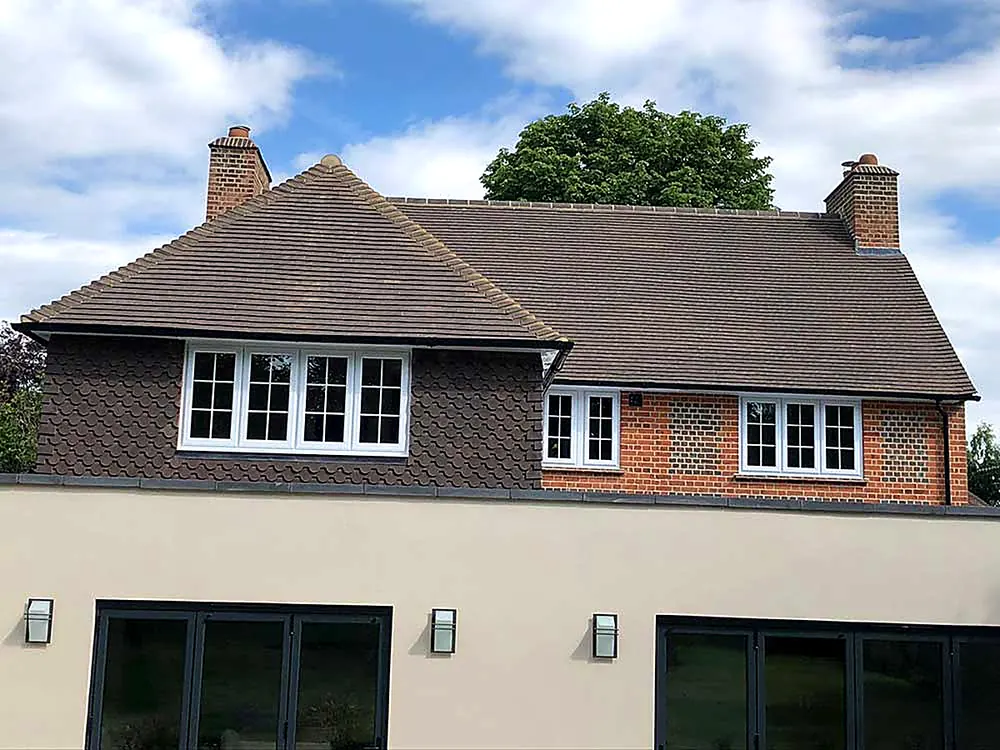
Reclaimed tiles for period properties
Older properties, and anything in a conservation area, often need to go back exactly as it came off. Handmade clay peg tiles and old Welsh slate have a character that new stock does not copy well, and a planning officer may insist on like for like. We set aside and re-use as many of your existing tiles as are still sound, and make up the shortfall with matched reclaimed stock of the same type. If the property is listed or in a conservation area, check with the local planning department before anything comes off the roof.
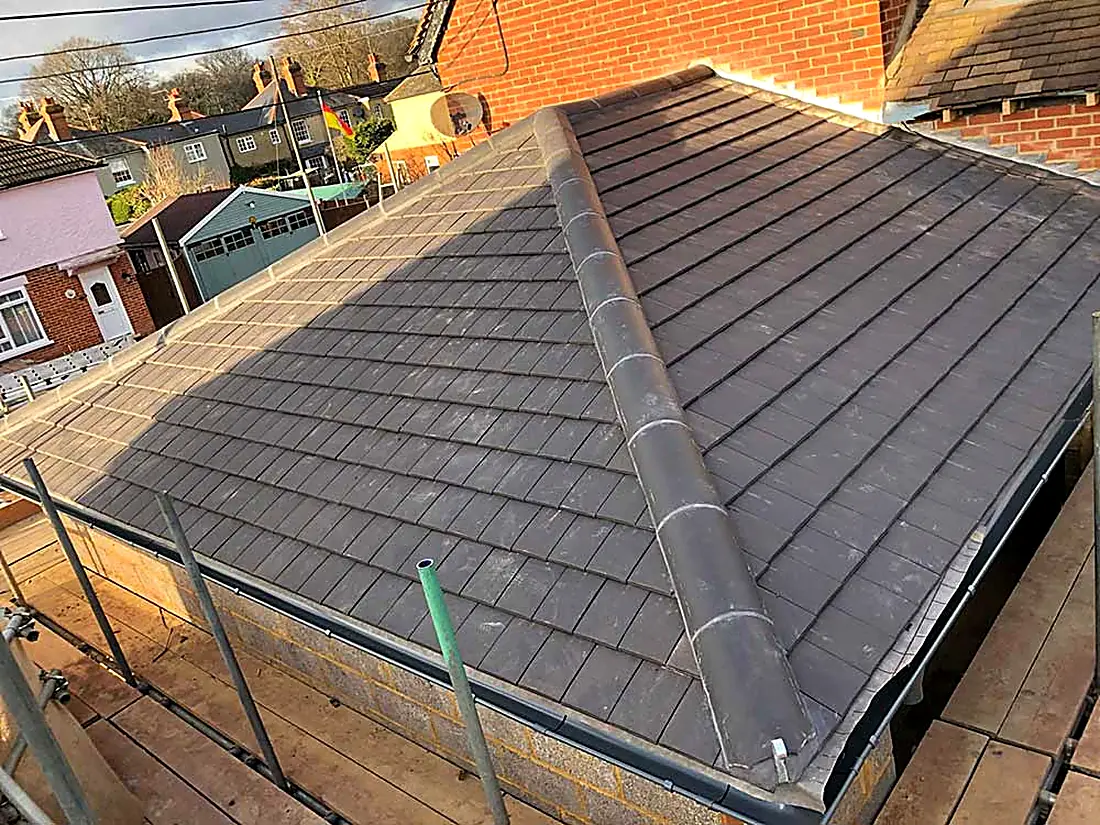
How a re-tile actually runs
Scaffolding goes up first. We strip the old covering into a skip, look over the rafters and any timber that needs attention, then felt, batten and tile from the eaves upward. Ridge, hips, valleys and any leadwork follow. We sheet up where we need to and clear the site at the end of each day. On an ordinary house it is a matter of days rather than weeks, although the weather gets a vote.
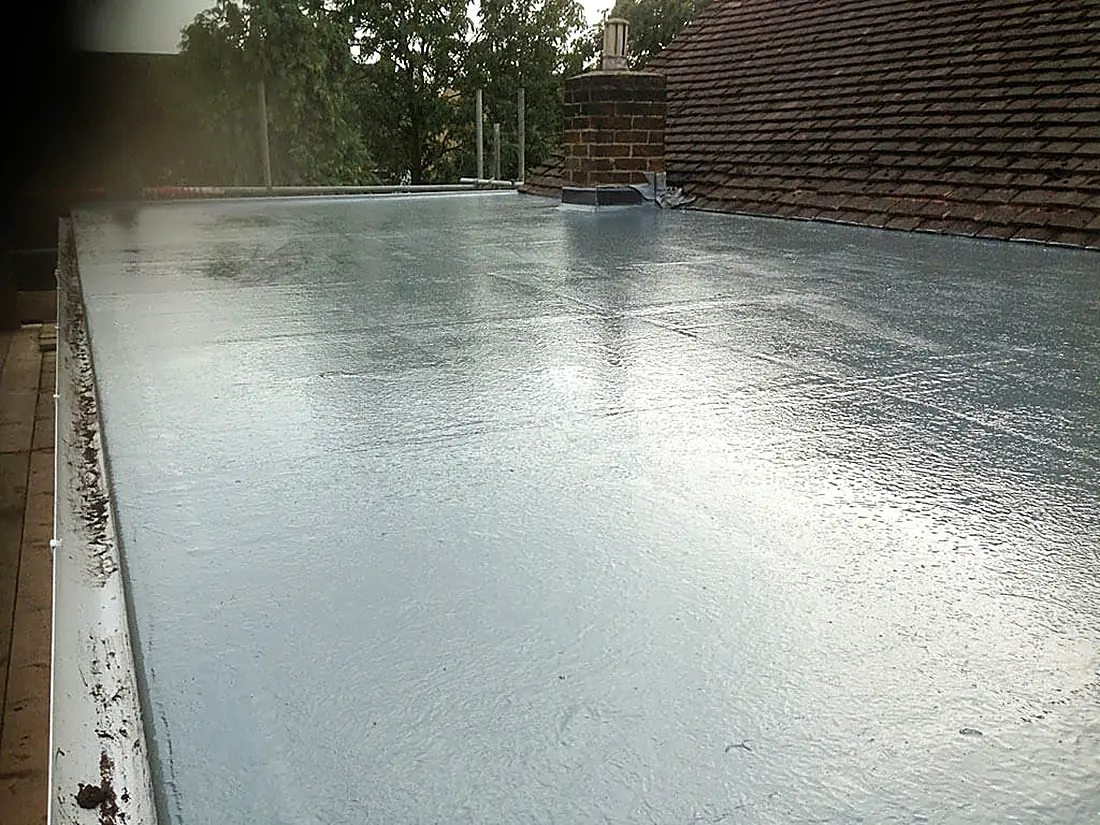
Free estimates and a full guarantee
We come out, get up and look properly, and give you a written estimate with no obligation and no pressure. Every new project we take on is backed by a full guarantee, and the estimate is free whether you go ahead or not. Quality at prices that aren’t through the roof is the promise, and a written estimate is what lets you hold us to it.
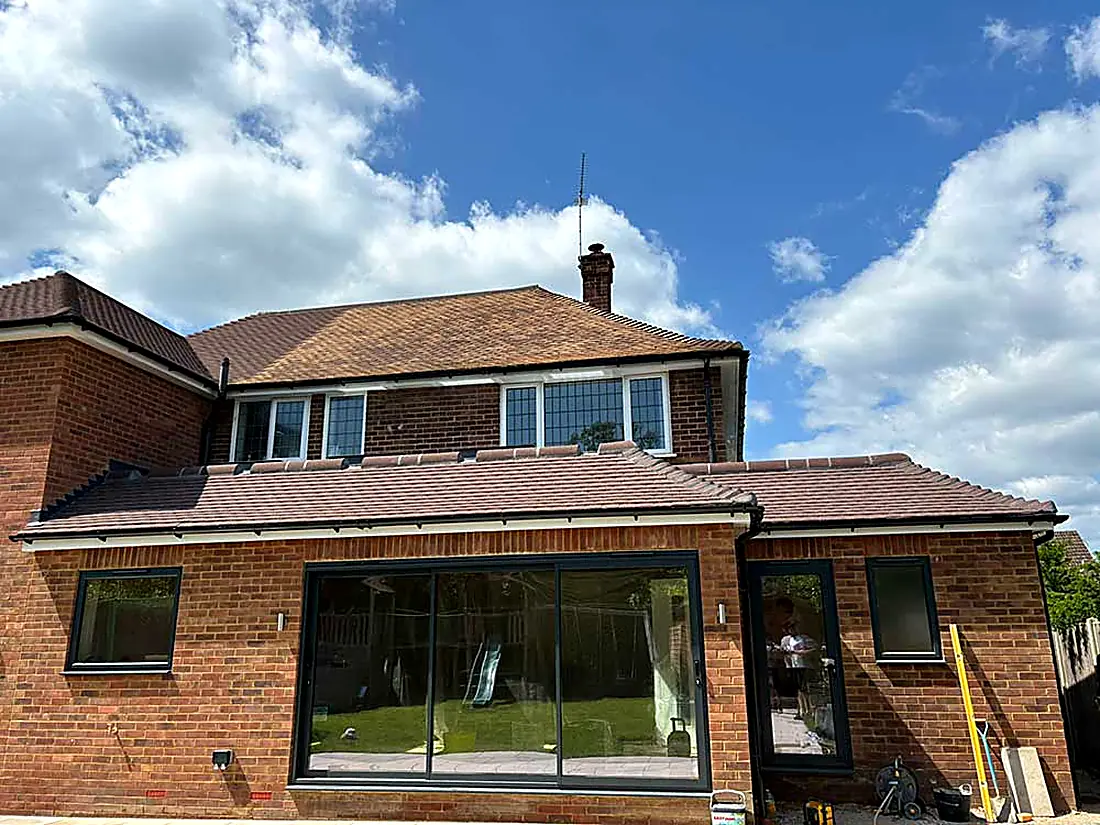
Matching your existing tiles on a repair
Getting a good match is the fiddly part of any roof tile replacement. Colours drift over the years. A concrete tile that left the factory a warm red will have weathered to a dull brown by year twenty, so a brand new tile of the same model still stands out. On a small repair we will often take sound tiles from a slope nobody sees, such as a rear elevation or a garage, put the new ones there, and use the weathered tiles where they show.
Some older profiles are simply no longer made. Where that happens we look for a current tile of the same size and profile, or we source second hand tiles of the original type. If there is a spare stack in your loft, dig one out before we visit. It saves a lot of guessing.
Pitch: what your roof will and will not take
Every tile has a minimum pitch, and it is not a suggestion. Lay a tile below the pitch it was designed for and rain will track back up under it in a driving wind. Plain tiles generally want a steep roof, around 35 degrees and up. Many interlocking concrete tiles are happy from about 22 degrees, and a few purpose made low pitch tiles go lower still. Slate sits in between, and the smaller the slate the steeper the roof needs to be.
This matters most on extensions and on roofs that were altered years ago by somebody who did not check. If your roof leaks in wind driven rain but stays dry in a straight downpour, an under pitched tile is one of the first things we look for.
Battens, membrane and what sits under the tiles
Strip a roof and the tiles are the last thing to go back on. Underneath sits the membrane, then the battens, then the tiles. Old roofs often have bitumen felt that has gone brittle and torn along the rafters, which is why water appears in the loft even though not a single tile is broken. Modern breathable membrane replaces it and lets moisture out of the roof space rather than trapping it.
Battens should be graded, treated timber of the right size, fixed at the correct gauge for the tile. It is one of the cheapest parts of the roof and one of the most worth getting right, because every batten carries the tiles above it and old nails rust. Where we strip a roof we renew felt and battens as a matter of course. Laying new tiles onto tired timber is not something we do.
Ridge, hip and verge work
The ridge runs along the top of the roof and the hips run down the corners. Both are capped with tiles either bedded in mortar or fixed with a dry system. Mortar has a shorter life than the roof it sits on. It cracks, frost gets into the crack, and eventually a ridge tile lifts in a gale. Loose ridge tiles are one of the most common jobs we get called out to.
Re-bedding is straightforward while the tile itself is still sound. A dry ridge system uses mechanical fixings and a ventilated roll instead of mortar, so there is nothing to crack and it vents the roof at the same time. Verges, the edges where the roof meets the gable, work much the same way. We repoint them, or fit a dry verge where the mortar keeps failing.
Patch repair or a full re-tile
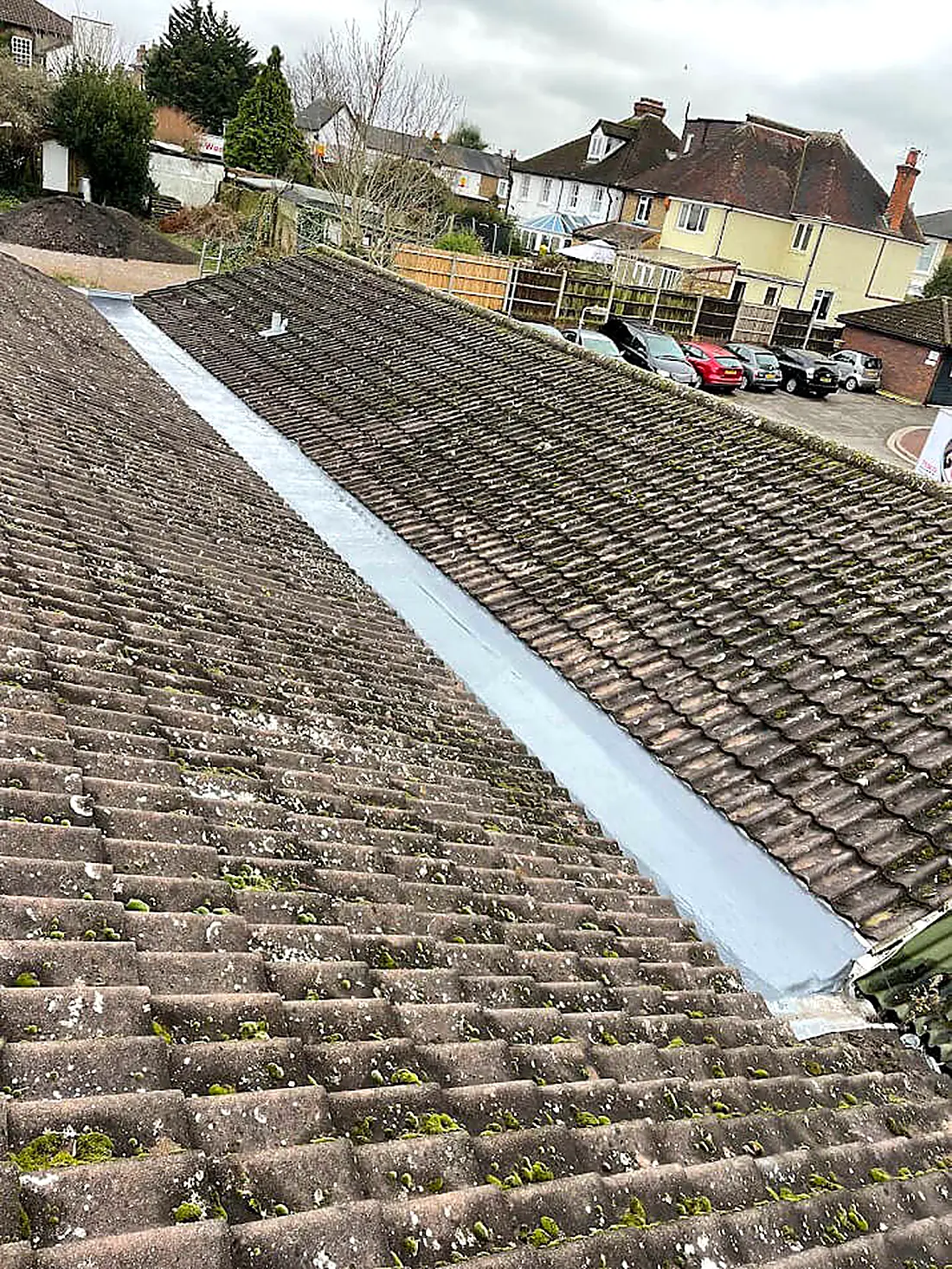
A patch repair is the right answer when the roof is basically sound. A branch has taken out a few tiles, a valley has failed, a slate has slipped. Fixing that is quick, and it is the honest answer far more often than people expect. We would rather carry out a small repair well than sell you a roof you do not need.
A full re-tile earns its money when the failures keep coming. Slates dropping off because the nails have rusted through, concrete tiles flaking and splitting across whole slopes, felt perished from end to end, a roof that dips between the rafters, or a covering that has already been patched in ten places. At that point you are paying for access again and again. We will tell you which of the two you are looking at, and we will say it plainly.
Moss is a symptom, not the problem
Moss on a north facing slope is normal and mostly harmless in itself. What does the damage is what it holds. Moss keeps water sitting against the tile through the winter, and when that water freezes it lifts the surface off a concrete tile and splits a clay one. It also washes down and blocks the guttering. Scraping and brushing it off is fine. Pressure washing a tiled roof is not, because it strips the surface of the tile and drives water up under the laps.
How we work
Four steps, and no surprises
The same run of events on every job, whether it is one tile or a whole roof.
Ring or email
Tell us what you have noticed. Grant can usually tell from a description whether it is a morning’s work or something bigger, and he will say so.
We come and look properly
We get up on the roof rather than guessing from the drive, and photograph anything you cannot see for yourself.
A written price
Set out clearly, so you can compare it fairly against another quote. Free, and no obligation to go ahead.
Booked in and cleared up
We hold the date as far as the weather allows, sheet up, and the rubbish leaves with us at the end of it.
Gallery
Work we have finished
Questions
Common questions
A properly laid tiled roof will usually last fifty years or more, and a natural slate roof longer still. What tends to fail first is not the tile but everything around it: the mortar at the ridge, the felt underneath, the nails holding the slates and the leadwork in the valleys. All of those are repairable on their own. It is when several of them go at once that a re-tile makes sense.
Yes, and very often that is all that is needed. Individual roof tile replacement is a small job. On most roofs we can lift the surrounding tiles, slide the new one in and re-fix without disturbing anything else. The awkward part is matching the tile, particularly on older or discontinued profiles. Send a photo through and we will tell you what we think you are dealing with before we come out.
Isolated damage such as a slipped slate or a few tiles off in a storm is a repair. A re-tile is the answer when the failures keep coming in different places: widespread cracking and flaking, slates dropping off because the nails have rusted, daylight through the felt, or a roof that visibly dips between the rafters. We will get up, look, and give you a straight answer either way.
Yes. We re-use as many of your existing tiles as are still sound and make up the difference with matched reclaimed stock of the same type. On listed buildings and in conservation areas this is often a condition of the work rather than a preference. It is worth speaking to your local planning department first, because the tile you are allowed to use can change the way the whole job is priced.
It depends entirely on the tile. Many interlocking concrete tiles can be laid from around 22 degrees, plain tiles generally want 35 degrees or more, and some purpose made low pitch tiles go lower. If a roof is too shallow for the tile sitting on it, wind driven rain gets under the laps no matter how carefully it was laid. That is a common cause of leaks that only ever show up in bad weather.
Yes, on any full re-tile. Once the tiles are off, new breathable membrane and treated battens go on before anything else. Old bitumen felt tears along the rafters as it ages, and battens that have carried a roof for decades are not worth reusing. Putting new tiles back over old felt and old battens is a false economy, because the part most likely to fail is the part you cannot see.
We work across Surrey, Middlesex and London, including Addlestone, Cobham, Weybridge, West Byfleet, Oxshott, Chertsey, Esher, Woking, Lightwater and Bagshot. We are on the phone Monday to Friday, 8am to 6pm, and estimates are free with no obligation. If you are just outside those towns it is still worth calling, and we will tell you honestly whether we can get to you.
Our other roofing services
If your roof is missing tiles, leaking in the wind or simply looking tired, have a word with Grant. Call 01932 690 995 or email grant@gbroofingservices.co.uk for a free estimate and honest advice on whether you need a repair or a re-tile.