

NEW ROOFS
New Roof Installation in Surrey, Middlesex and London
A new roof is a big job and a big spend. Here is exactly what we strip, what we replace and what we leave behind, so you can compare our estimate with anyone else’s.
Not every tired roof needs replacing
GB Roofing has been re-roofing houses across Surrey, Middlesex and London for many years. Grant looks at every job himself, tells you honestly whether the roof needs replacing or whether a repair will see you right for a few more winters, and puts the estimate in writing. Free, with no obligation to book.
How to tell when a roof is past repairing
Roofs rarely fail all at once. They go slowly, and the first sign is usually inside the house. A damp patch on a bedroom ceiling after driving rain. Daylight showing through the felt in the loft. A bucket that never quite gets put away.
A few slipped tiles is a repair. A roof where the battens crumble when you press them, the felt has torn along every rafter and the old nails have rusted through is not. That last one is called nail sickness, and it is why an older roof starts dropping tiles in ordinary weather rather than in a storm.
If you are not sure which one you have, we will tell you. If the timber underneath turns out to be sound, we will say so and quote you for a repair. That is a better outcome for everyone.
- Tiles slipping or sliding in normal weather, not just after a gale
- Torn, sagging or missing felt visible from inside the loft
- Battens that are soft, split or crumbling when touched
- Leaks appearing in several different places rather than one spot
- A slope that dips, or a ridge line that has gone wavy
- Repairs that cost more every year and never quite hold
What a full strip and re-cover actually involves
A new roof means taking the old one off, not covering it up. We strip the tiles and the old felt back to the rafters, then look at what we have found before anything goes back on.
Timber comes next. Rafters are checked for rot and splits, particularly around chimneys and valleys where water has been getting in for years. Soft timber is cut out and replaced. The roof is then covered with a breathable membrane, re-battened with treated battens set to the right gauge for your tile, and re-tiled.
Lead is renewed rather than reused. New flashings go to chimneys, abutments and dormers, dressed into the brickwork instead of stuck on with mastic. Ridge and hip tiles are re-bedded and mechanically fixed, which is the dry fixing standard all new work has to meet. Eaves trays go in so rainwater lands in the guttering and not behind it.
- Scaffold up, with edge protection and a safe working platform
- Old tiles and felt stripped off and cleared away
- Rafters and timbers checked, rotten sections cut out and replaced
- Breathable membrane laid, treated battens fixed at the correct gauge
- Roof re-tiled or re-slated, with verges and eaves finished
- New lead flashings to chimneys, abutments and valleys
- Ridge and hip tiles re-bedded and mechanically fixed
- Site cleared, guttering cleaned out, scaffold struck
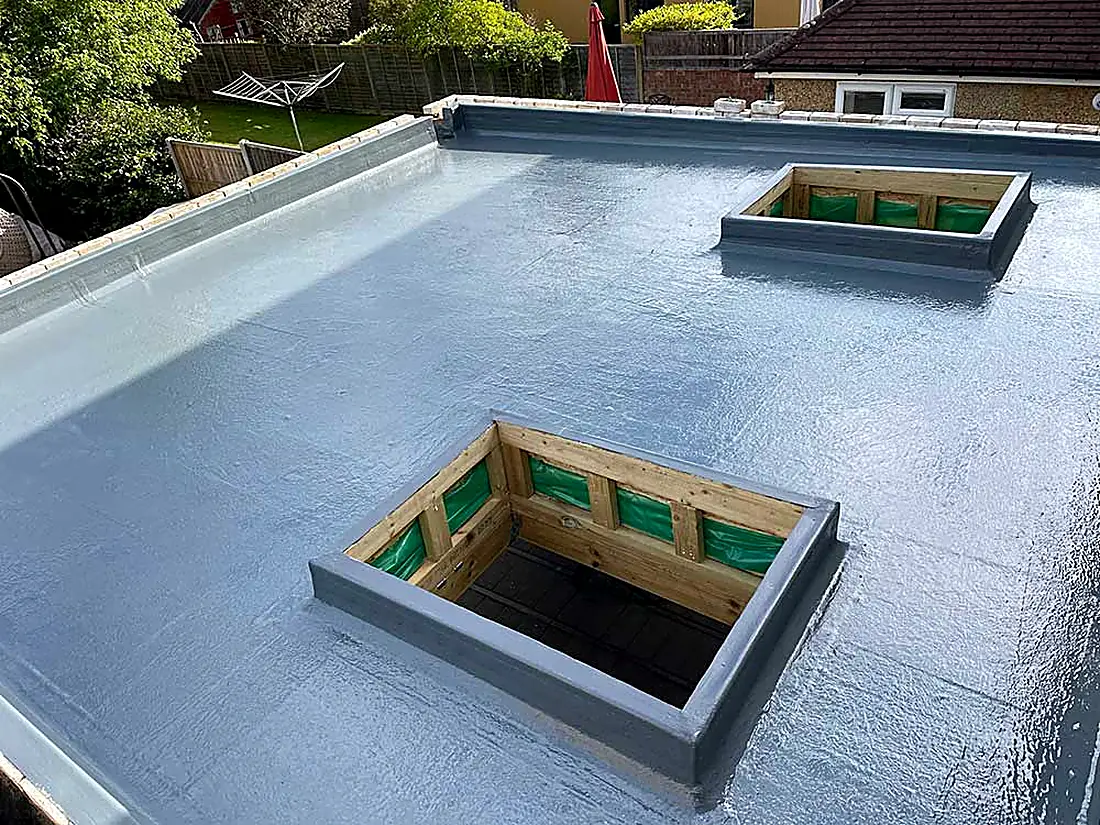
You get a look and an honest answer
Grant comes out, gets up and looks properly, then tells you what he has found and what the pitfalls might be. Sometimes that means a new roof. Sometimes it means a repair and another decade. If a repair will see you right for a few more winters, that is what he will tell you, even though it is the smaller job.
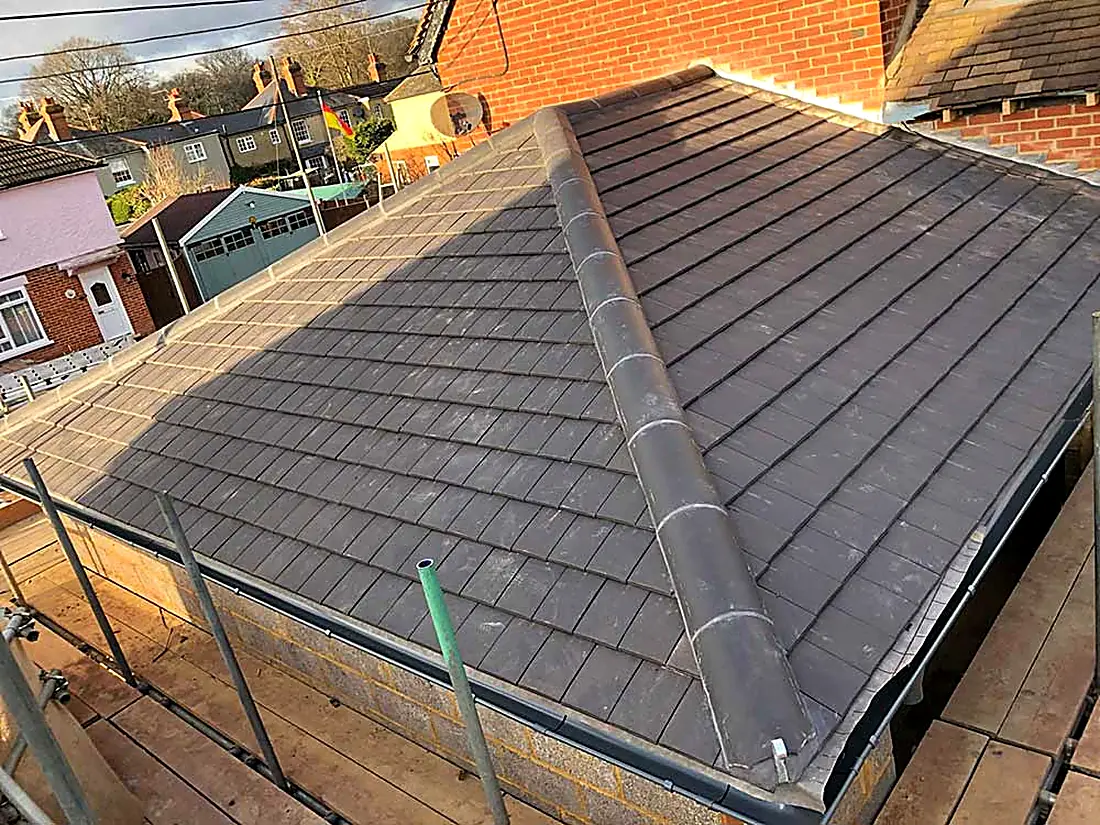
Local roofers who answer the phone
We work across Surrey, Middlesex and London, with most jobs a short drive from Addlestone. Cobham, Weybridge, West Byfleet, Oxshott, Chertsey, Esher, Woking, Lightwater and Bagshot are all regular ground for us. Ring 01932 690 995 between 8am and 6pm, Monday to Friday, and you will speak to someone who has been on a roof.
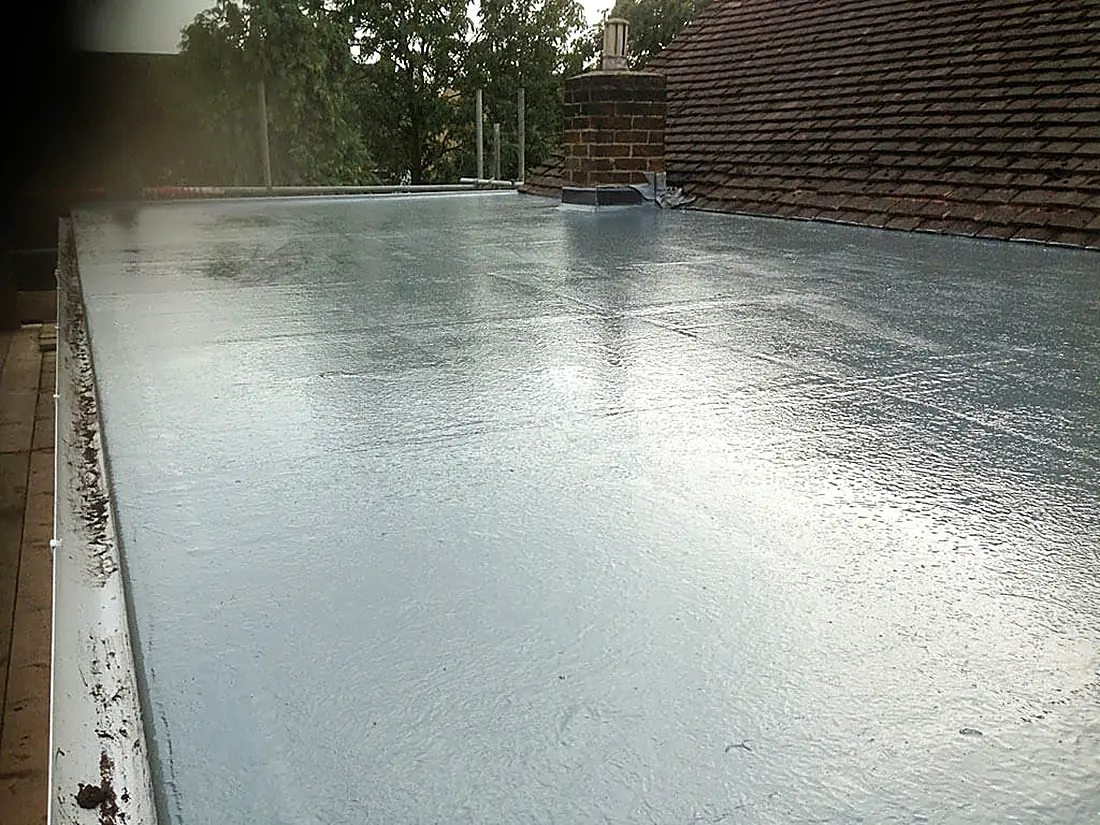
Guaranteed, and cleared up behind us
Every new project is backed by a full guarantee. We clear the site at the end of each day, keep you updated on what has been done and what is next, and leave the drive and the garden as we found them. Small things, but they are the ones people remember.
STRIP AND RE-COVER
What happens between the scaffold going up and the skip going away
A full re-roof runs in the same order every time, and each stage gets checked before the next one covers it up.
Scaffold, then strip back to the rafters
The working platform goes up first, normally a day or two before we start. The old tiles and the old felt then come off and go straight into the skip. Nothing gets covered over.
The timbers get looked at
With the roof open we go through the rafters, the wall plate and the timber around chimneys and valleys, which is where water has usually been getting in for years. Soft or split timber is cut out and replaced before anything goes back on.
Membrane, eaves trays and battens
A modern breathable membrane goes over the rafters instead of old bitumen felt, with eaves trays at the bottom so rainwater lands in the guttering rather than behind it. Treated, graded battens are then fixed at the correct gauge for your tile.
Tiling from the eaves upward
Tiles or slates go on from the bottom course up, so every one laps the course below it. Verges, valleys and any cutting are formed as we work up the slope, and soakers go in under each course as the tiles reach a chimney or a wall.
Ridges, cover flashings and the clear up
Ridge and hip tiles are bedded and mechanically fixed, which is what BS 5534 requires on new work. Stepped cover flashings, aprons and back gutters are then dressed over the soakers, and we sweep for nails before the scaffold comes down.
Tiles, slates and matching what is already there
Most homes around Surrey are covered in concrete interlocking tiles, plain tiles or natural slate. What you pick changes the look of the house more than almost anything else you will ever do to it, so it is worth ten minutes of thought.
Weight matters too. Swapping slate for concrete tile puts a lot more load on rafters that were never designed to carry it, so that change needs checking rather than assuming. If the property is listed or sits in a conservation area, the new covering normally has to match the appearance of the old one.
- Concrete interlocking tiles: quick to lay, a wide choice of colours, sensible on cost
- Plain tiles in clay or concrete: small, double lapped, the traditional look on older properties, and more labour because there are far more of them
- Natural slate: thin, sharp lines, and a very long life if it is laid well
- Fibre cement slate: lighter and less costly than natural slate, with a tidy uniform finish
Scaffolding, timings and living through the job
Scaffold goes up first, normally a day or two before we start, and stays until the roof is done. It is not an optional extra to be saved on. Any proper re-roof needs a working platform and edge protection, and a roofer who suggests otherwise is cutting a corner you will not be able to see afterwards.
A straightforward semi-detached roof is usually a few days of work. Add valleys, dormers, two chimneys and a cut hip and it can run to a fortnight or more. Weather moves things about. We sheet up at the end of each day and never strip more roof than we can make watertight before we leave.
You can stay in the house throughout. There will be noise, a skip on the drive and some dust in the loft. We tidy up every evening and sweep for nails before the scaffold comes down.
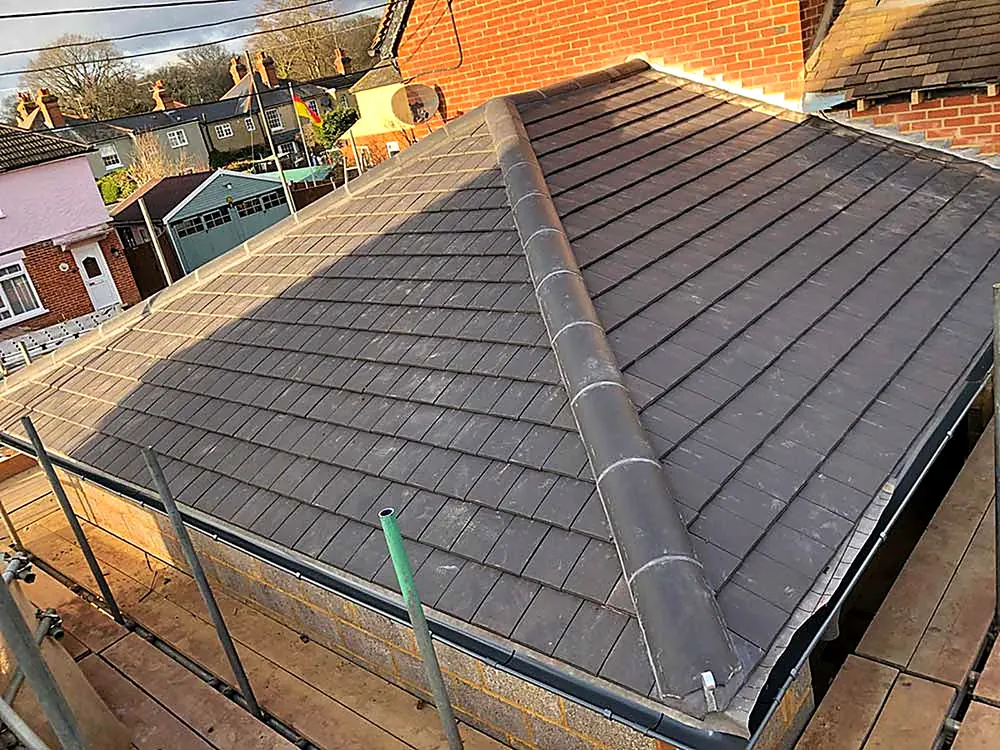
Building regulations and why they matter to you
Re-covering more than a quarter of a roof slope is notifiable work under the Building Regulations. In practice a full re-roof has to be signed off, either through your local authority building control or under a competent person scheme.
Two parts usually come into it. Part L asks whether the insulation should be brought up to current levels while the roof is open, which is by far the cheapest moment to do it. Part A covers structure and applies if you are moving to a heavier covering. On top of that sits BS 5534, the British Standard that made mechanical fixing of ridges, hips and verges compulsory. Mortar on its own is no longer enough.
None of this is paperwork for the sake of it. It is the difference between a roof that shrugs off a wet winter and one that starts moving in the first proper gale.
What a proper price for a new roof should include
Ask for the estimate in writing, then read what is inside it. A suspiciously low number usually means something has been left out, and it reappears later as an extra.
Our estimates are free and there is no obligation to go ahead. Every new project we take on is backed by a full guarantee. Quality at prices that aren’t through the roof is not just a line on the van.
- Scaffolding: putting it up, the hire period and taking it down
- Stripping and disposal of the old roof, skip included
- Breathable membrane and treated battens, not just the tiles
- All new lead work to chimneys, abutments and valleys
- Ridge and hip tiles re-bedded and mechanically fixed
- Timber repairs, or a clear rate for them if the extent is unknown until the roof is open
- Guttering, eaves trays and fascia work if they are being done at the same time
- Whether VAT is included, and exactly what the guarantee covers
Ask to see the battens
Before the tiles go back on, ask what went underneath. Battens should be graded and marked, and the membrane should be a modern breathable one rather than old bitumen felt. Anyone doing the job properly will be pleased to show you. It is the part of a new roof you will never see again, and it is the part that decides how long the roof lasts.
How we work
Four steps, and no surprises
The same run of events on every job, whether it is one tile or a whole roof.
Ring or email
Tell us what you have noticed. Grant can usually tell from a description whether it is a morning’s work or something bigger, and he will say so.
We come and look properly
We get up on the roof rather than guessing from the drive, and photograph anything you cannot see for yourself.
A written price
Set out clearly, so you can compare it fairly against another quote. Free, and no obligation to go ahead.
Booked in and cleared up
We hold the date as far as the weather allows, sheet up, and the rubbish leaves with us at the end of it.
Gallery
Work we have finished
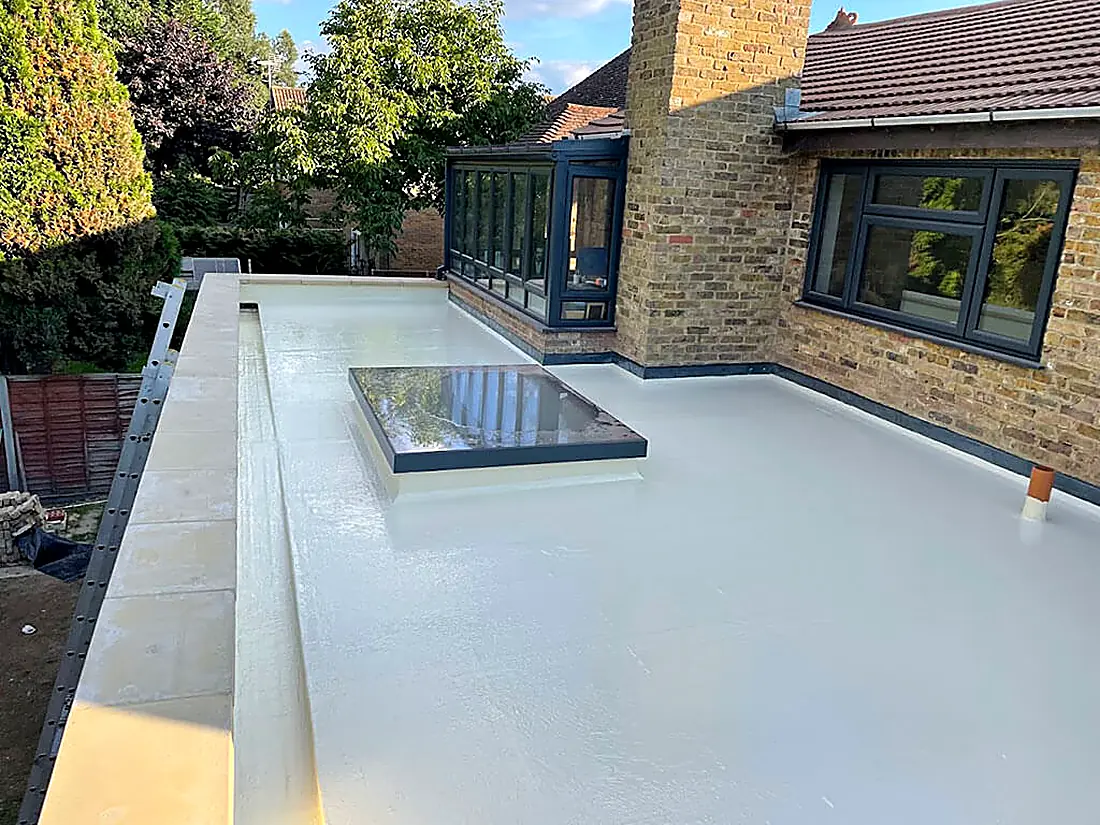
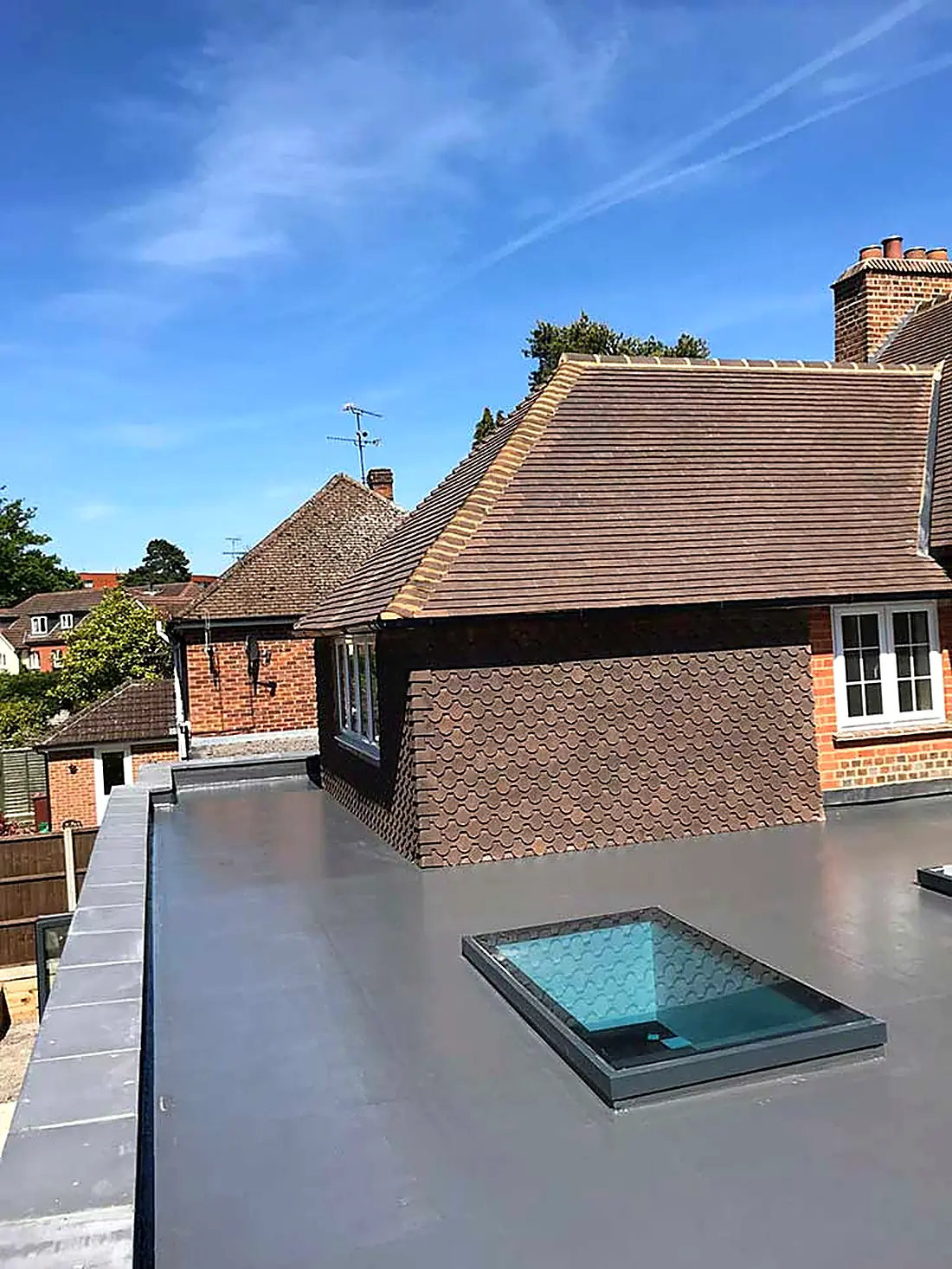
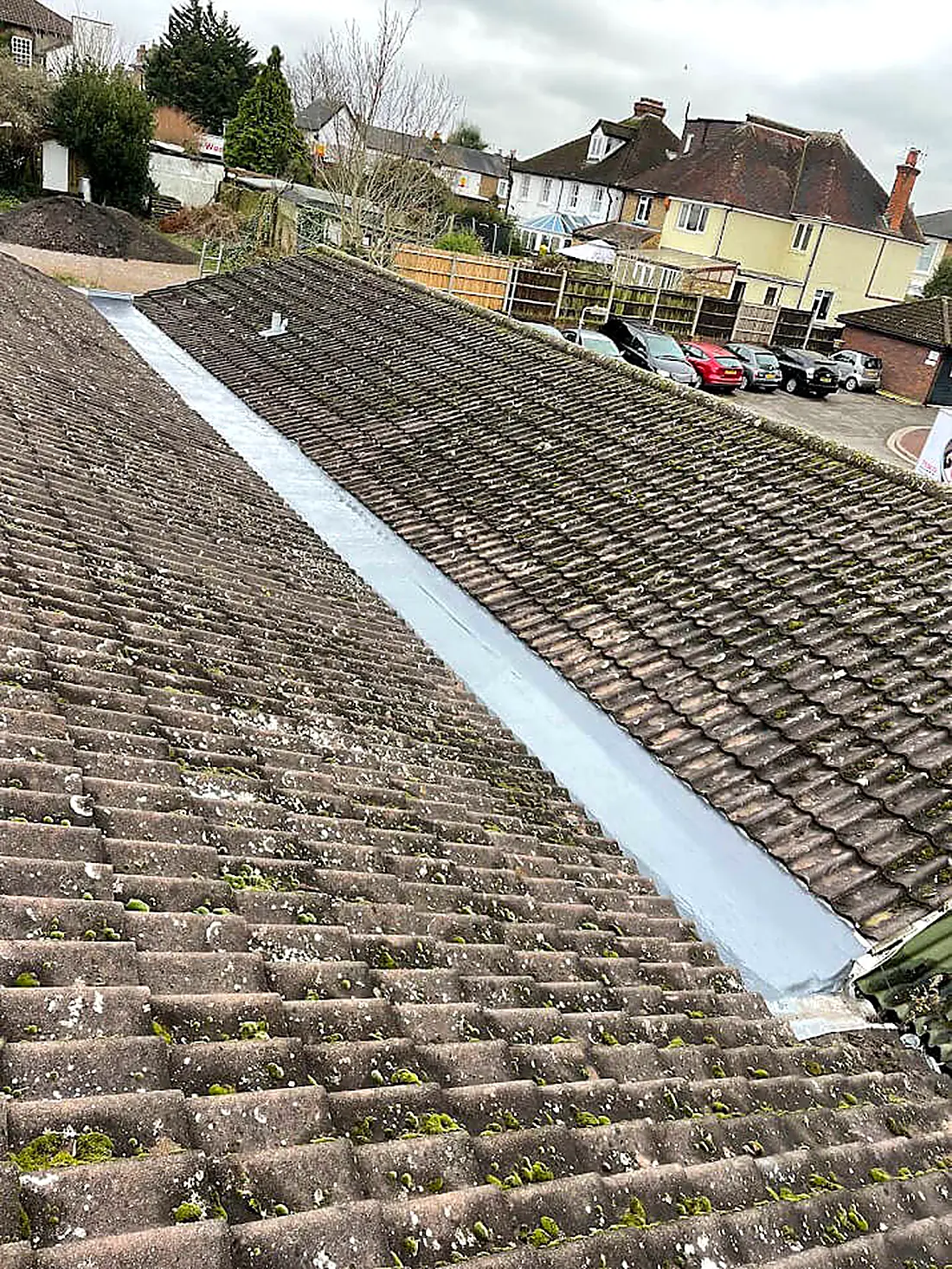
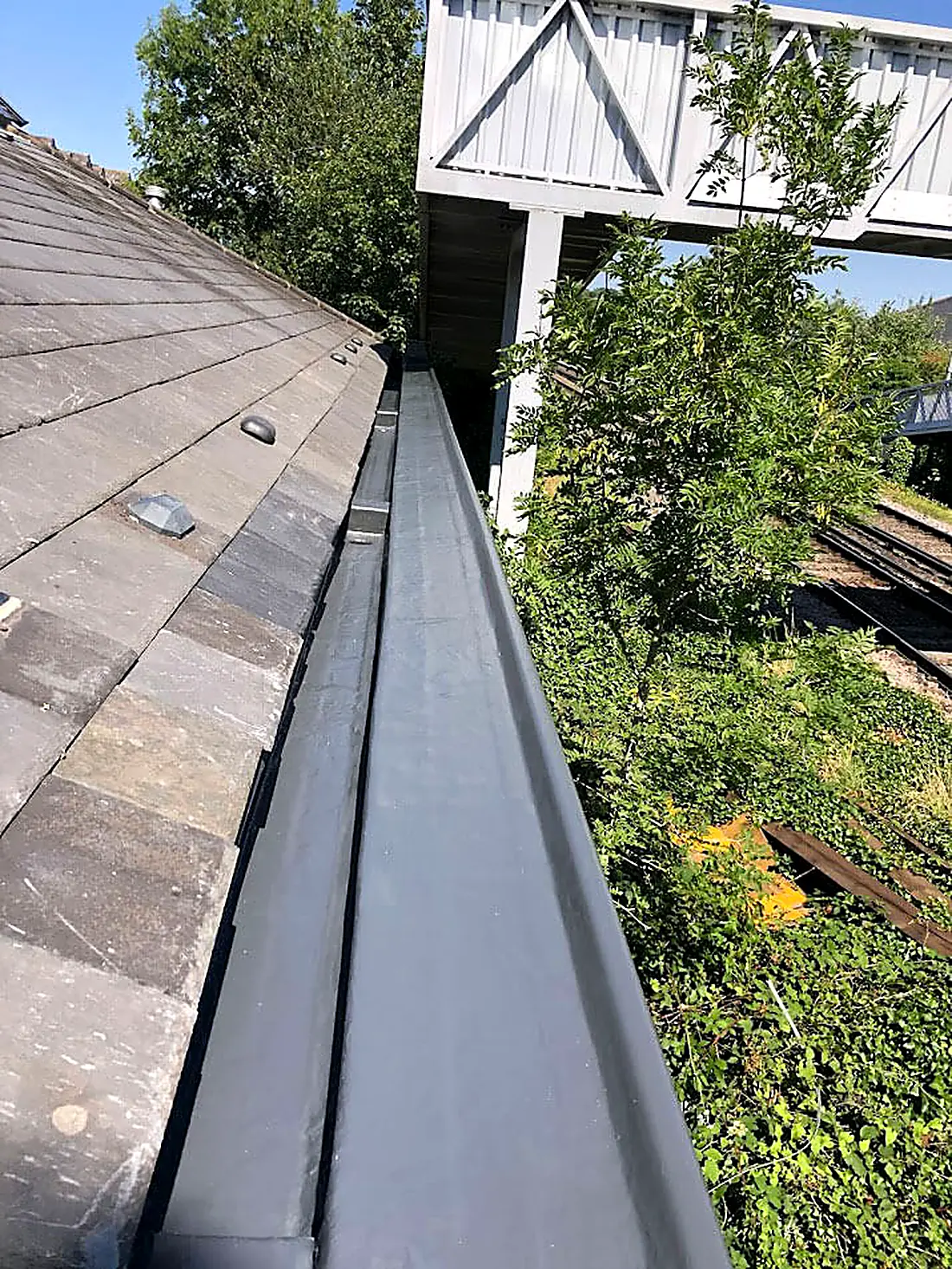
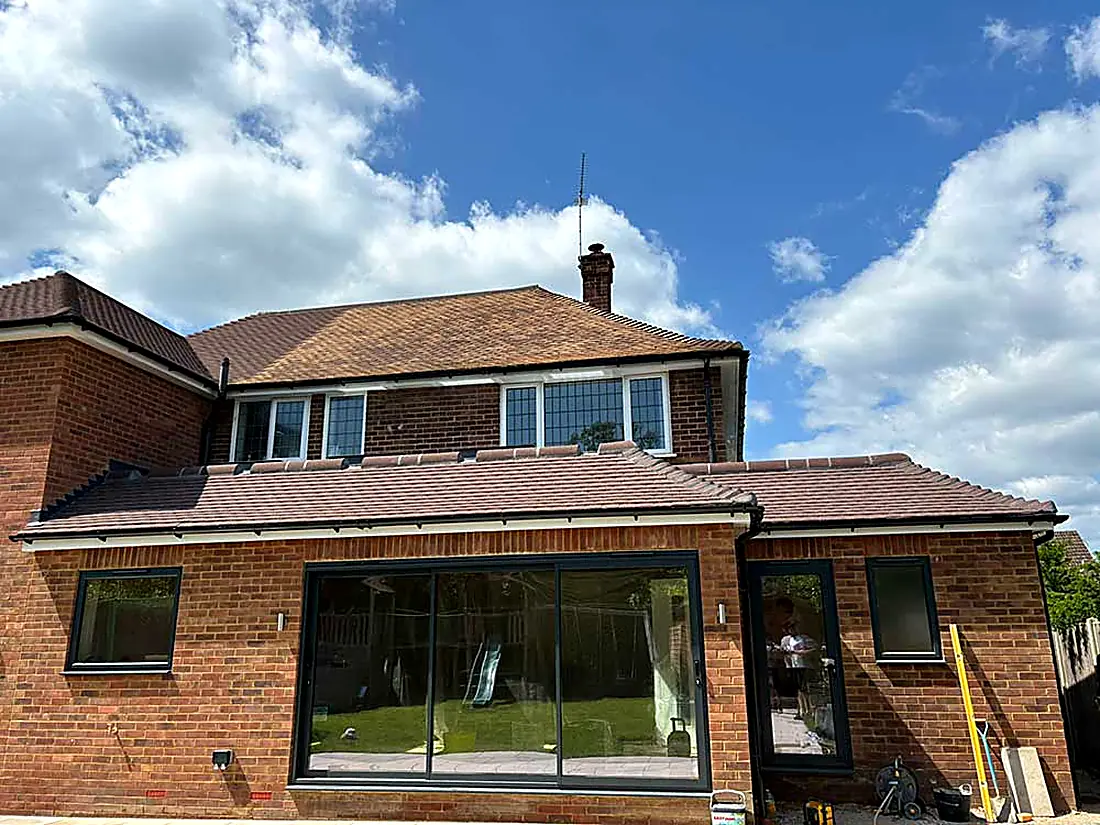
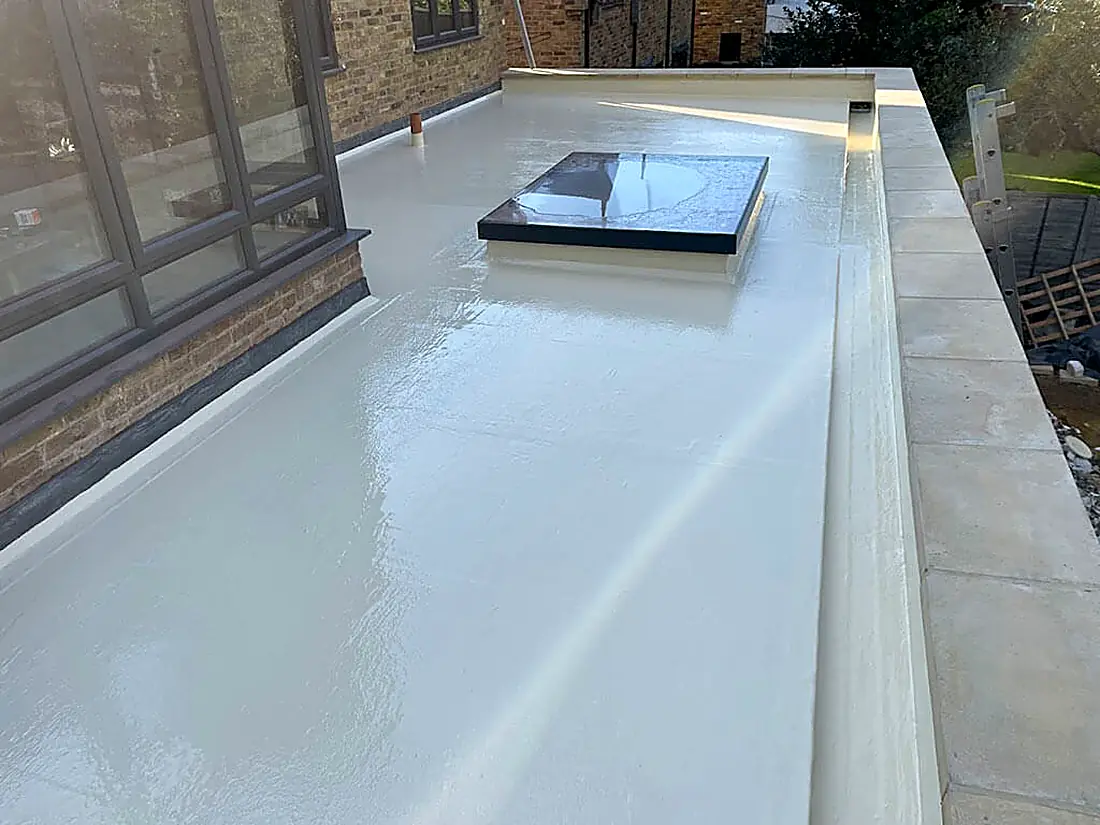
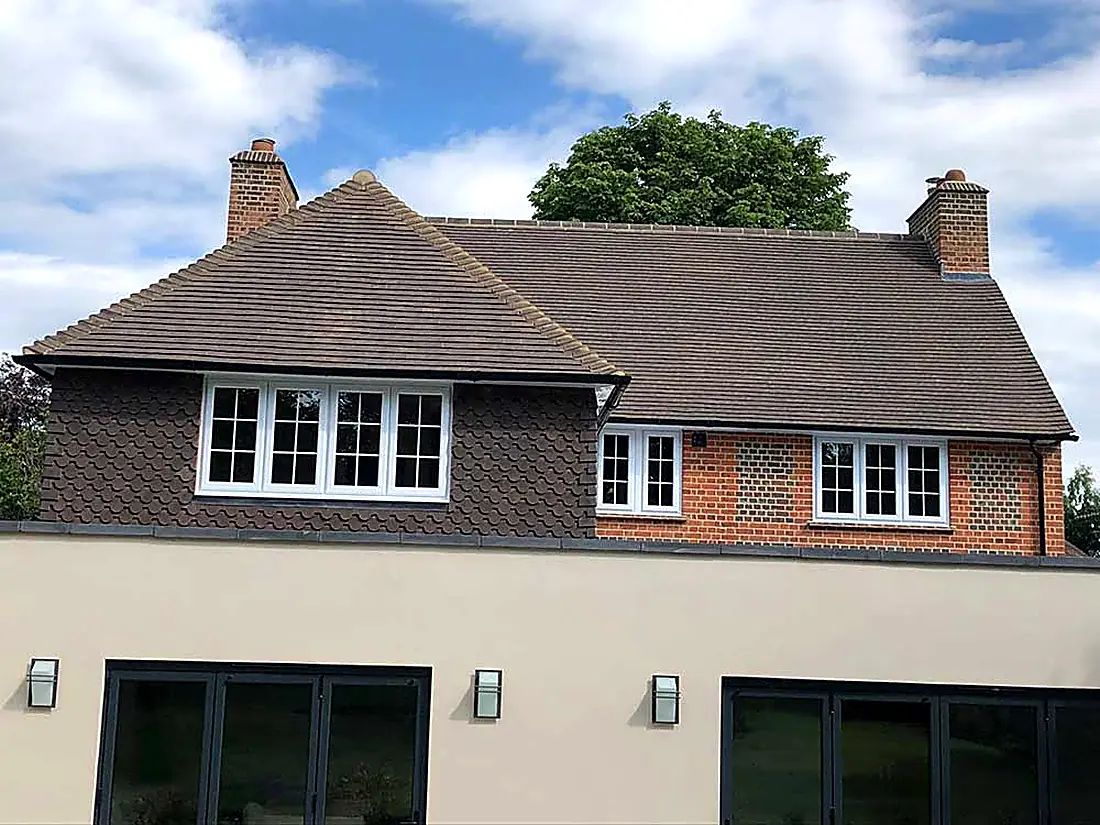
Questions
Common questions
Most house re-roofs take between a few days and a fortnight. A standard semi-detached roof with no dormers is usually three to five working days once the scaffold is up. A larger detached house with valleys, hips, dormers and more than one chimney takes longer, and lead work adds time. Bad weather can push things back. We give you a realistic start date and tell you as soon as anything changes.
Usually not. Replacing a roof with a similar covering counts as maintenance and sits outside planning permission for most houses. You will need consent if the property is listed, if it is in a conservation area, or if you are changing the shape of the roof or the appearance of the covering. Building Regulations are a separate matter and they do apply to a full re-roof, whatever the planning position.
Sometimes, and it is always worth asking. Good clay plain tiles and natural slate often come off in sound condition and can be re-laid, with new tiles making up the shortfall. Old concrete tiles are usually past saving, and in many cases the rusted nails and soft battens holding them are the very reason the roof is being stripped. We will tell you what is salvageable once we have seen it.
In the short term, yes, and while the roof still has life in it a repair is the right call. Replacement wins once repairs stop holding. If tiles are slipping in ordinary weather, the felt has torn through and the battens have gone soft, you are paying a roofer every year to patch something that is failing all over. We will tell you plainly which side of that line your roof is on.
It depends on the size and shape of the roof, the covering you choose and how much timber needs replacing, so nobody can give you a sensible figure over the phone. What we can do is come out, measure up, look at the state of the timbers and put a written estimate together with the scaffolding, waste removal, membrane, battens, tiles and lead all itemised. It is free and there is no obligation.
It is worth doing while the roof is open. The Building Regulations ask you to look at insulation when a roof is re-covered, and the work will never be cheaper than it is with the tiles off. What suits your house depends on whether the loft is used, whether it is a warm or a cold roof, and how much ventilation the design needs. We will talk it through before you commit to anything.
We cover Surrey, Middlesex and London. Most of our work sits within a short drive of Addlestone, including Cobham, Weybridge, West Byfleet, Oxshott, Chertsey, Esher, Woking, Lightwater and Bagshot. We are on the phone Monday to Friday, 8am to 6pm. If you are a little outside that patch, ring anyway and we will tell you straight away whether we can get to you.
Our other roofing services
If you think your roof is coming to the end, get a second opinion before you spend anything. Call Grant on 01932 690 995 or email grant@gbroofingservices.co.uk. Free estimate, no obligation, and every new project backed by a full guarantee.