

FLAT ROOFING
Flat Roofing Surrey: Fibreglass, Felt and Built-Up Roofs
Fibreglass GRP, torch-on and pour-and-roll felt, and built-up systems, fitted properly on garages, dormers, extensions and porches across Surrey, Middlesex and London. Free estimates, and every new project carries a full guarantee.
It is never just the covering
A flat roof only works if the whole build-up works. The covering matters, but so do the falls, the decking underneath, the upstands where the roof meets a wall, and the way water gets off the roof and into the guttering. We fit fibreglass, felt and built-up flat roofs, and we sort out the details that decide how long they last.
The flat roofing systems we fit
Most of the flat roofs we are asked to look at are garages, dormers, single storey extensions, porches and bay tops. Three coverings account for nearly all of that work, and the right one depends on the deck, the size of the roof, the access and what you want to spend.
If you already know what you want, we will price it. If you are not sure, Grant will tell you what he would put on his own roof and why, based on what he finds when he gets up there rather than what is easiest to sell.
- Fibreglass GRP: one continuous sheet with no joints or laps to lift, so there is very little on it to go wrong and it lasts for decades.
- Felt: reliable and cost effective, using three layer torch-on or traditional pour-and-roll methods.
- Built-up roofing: multi-layered for improved insulation and long-lasting durability, and useful on larger or commercial roofs.
- Repairs to all three, where the deck and the falls are still sound.
Falls and drainage, and why a flat roof is never truly flat
Every flat roof is laid to a slight slope so rainwater runs to an outlet. That slope is called the fall. Guidance sets a finished fall of around 1 in 80, and because timber settles and boards move over the years, roofs are normally designed at about 1 in 40 so the finished result still drains. Falls are created with firrings, with tapered insulation, or by shaping the deck.
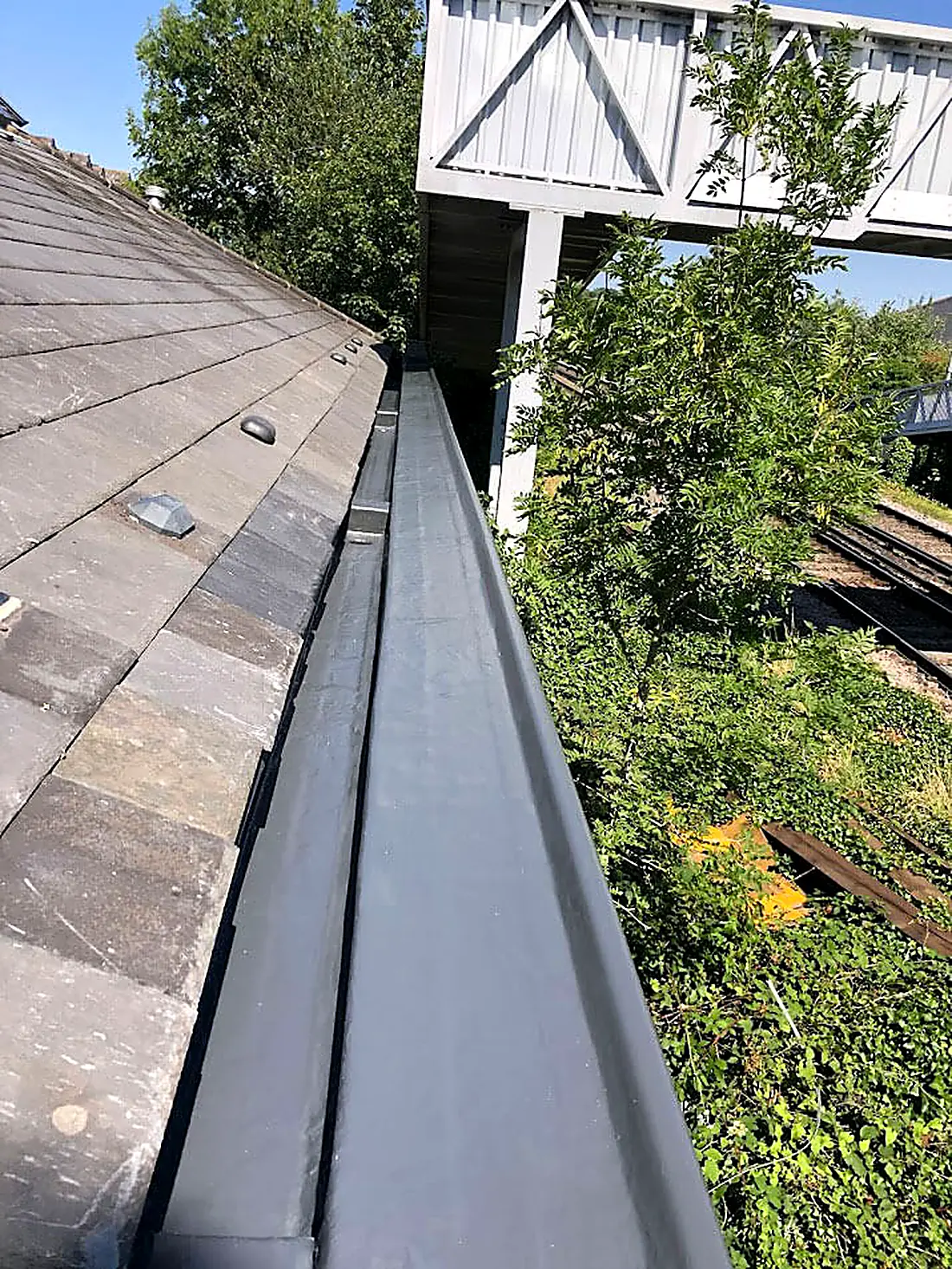
Water then needs somewhere sensible to go. That means an outlet or a gutter at the low end, sized for the area of the roof, kept clear of leaves and moss, and connected into the rainwater pipe properly. Plenty of the flat roofs we replace had a perfectly decent covering. They failed because the water had nowhere to run.
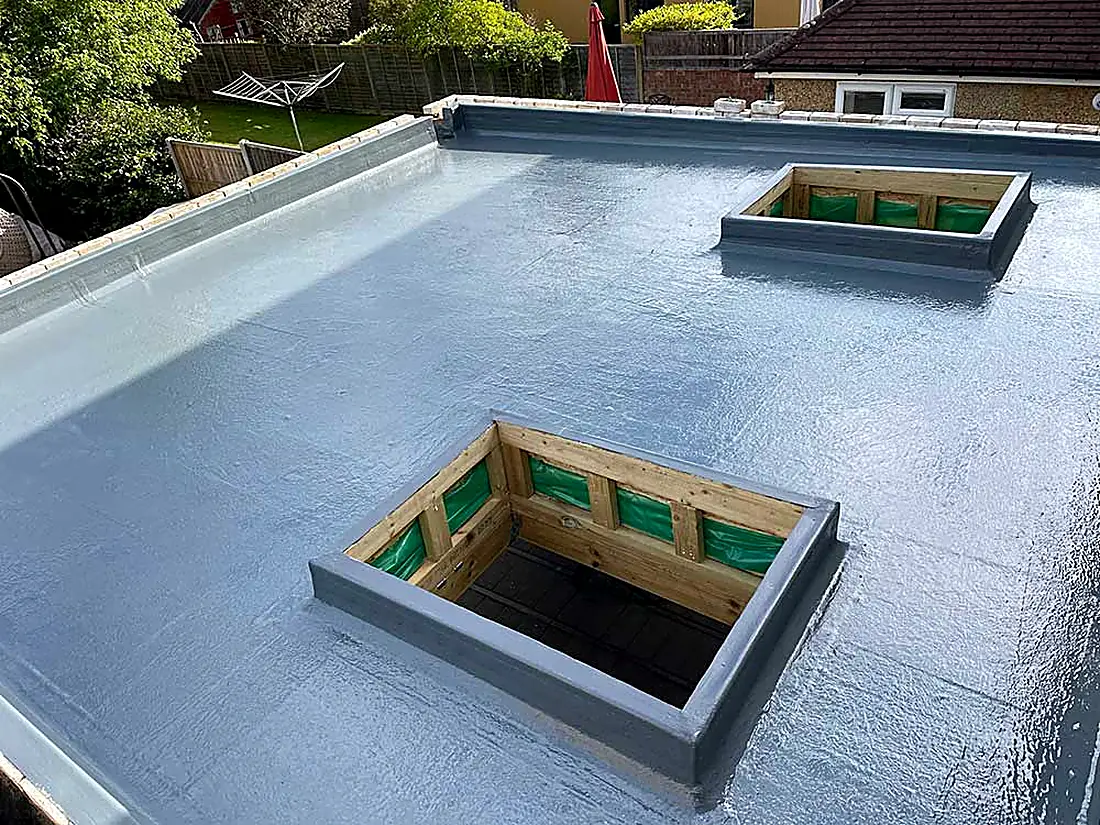
Fibreglass GRP flat roofs
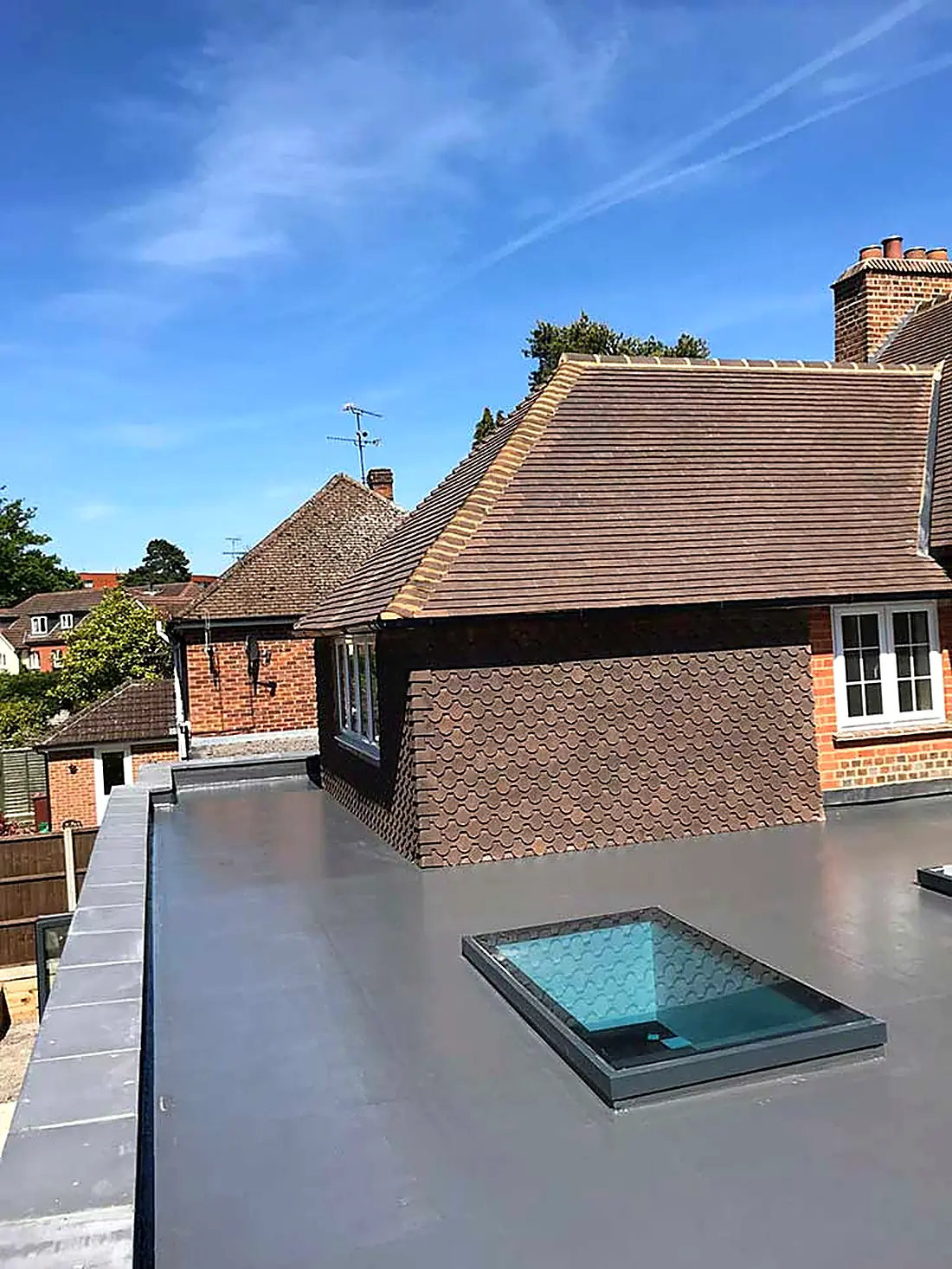
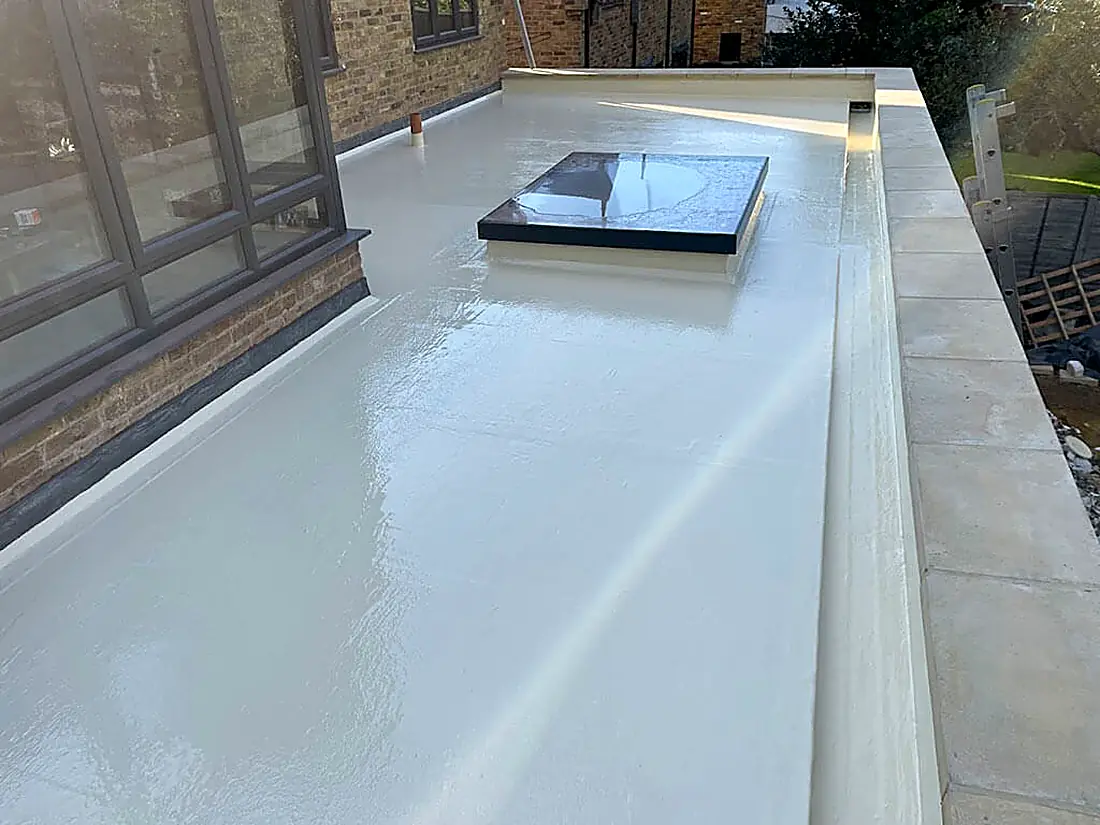
Fibreglass, or GRP, is laid wet over a new deck and cures into one continuous sheet. There are no seams and no laps to lift, which is why a well laid fibreglass roof lasts for decades and asks so little of you. The trims are bonded in as part of the roof, and the topcoat can be finished in a colour that suits the house. It needs a proper deck and dry weather, so we will not rush one on in the wrong conditions.
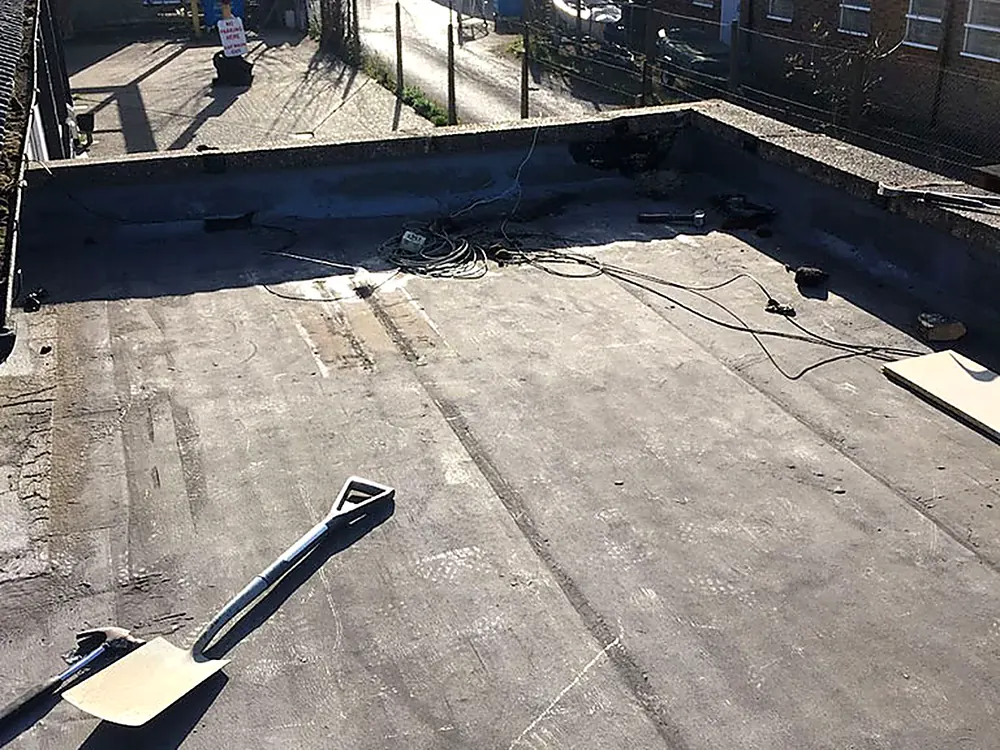
Felt flat roofs, done properly
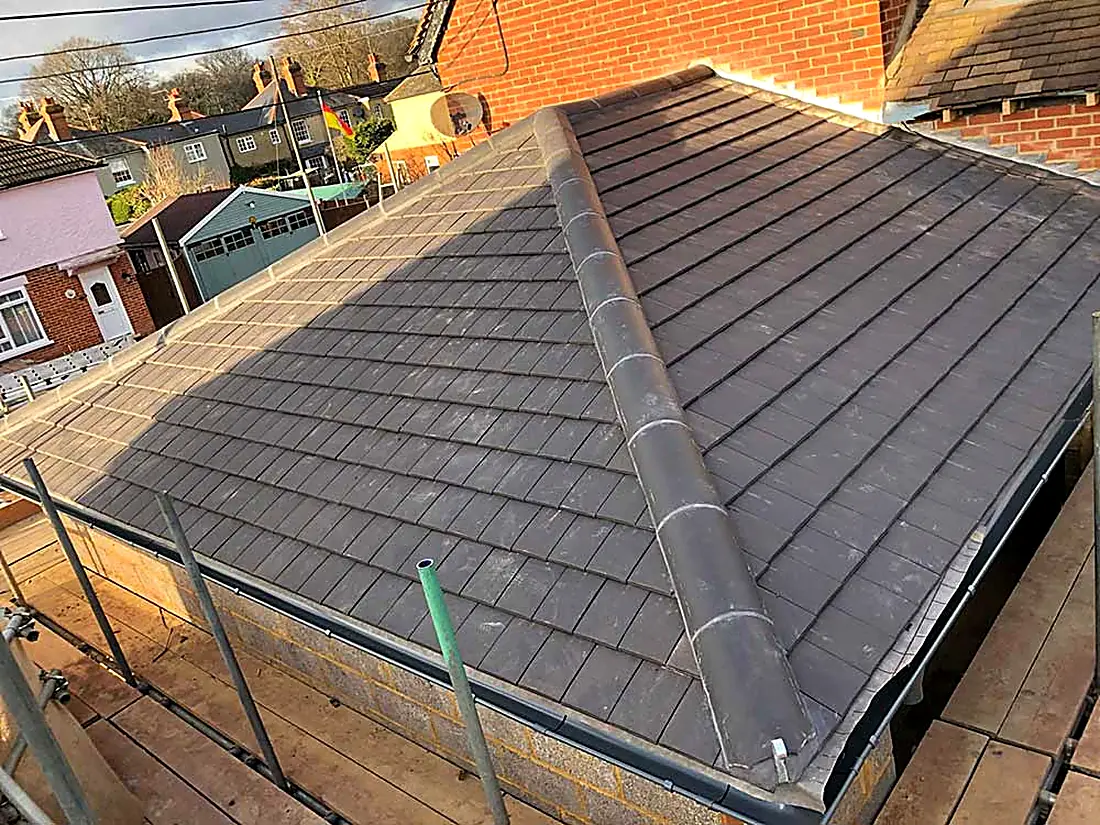
Felt got its poor reputation from thin single layer work done cheaply years ago. Modern high performance felt is a different thing. We install three layer torch-on systems and traditional pour-and-roll, both reliable and cost effective, with mineral finished caps that stand up to sun and frost. On a garage or an outbuilding it is often the sensible choice, and it goes on quickly.
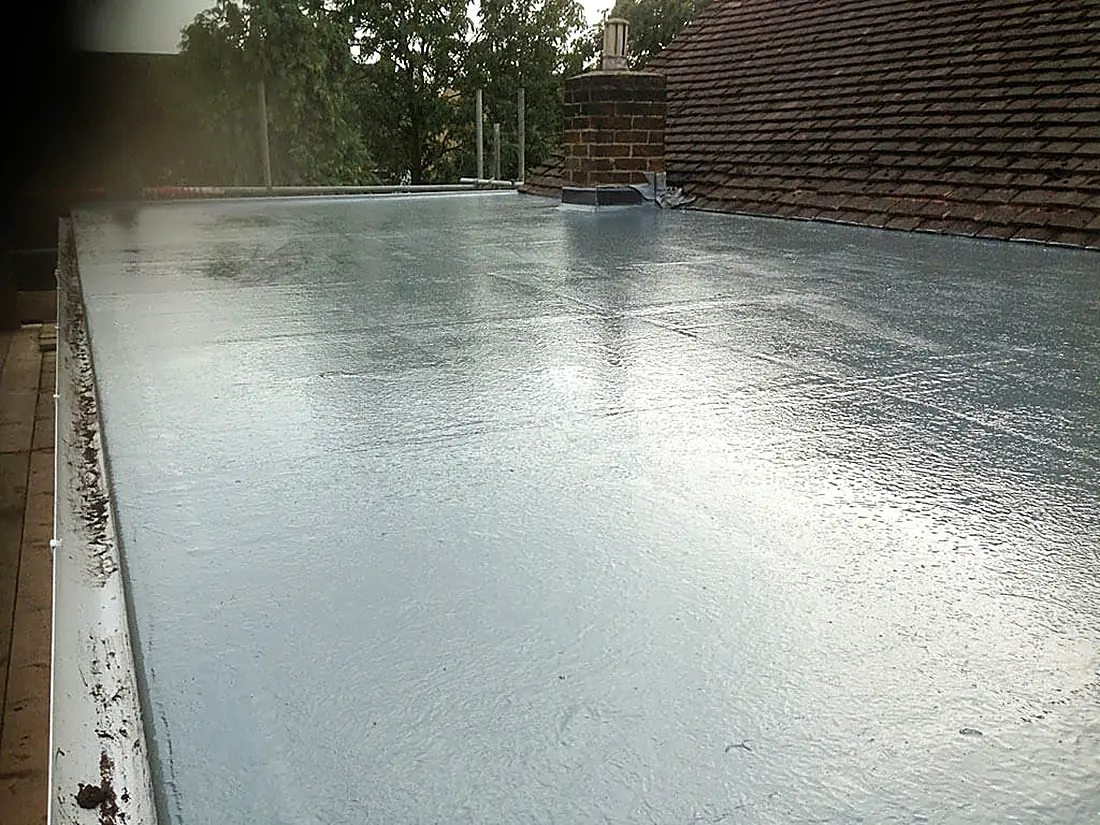
Built-up systems on larger roofs
Built-up roofing uses several bonded layers, which improves insulation and gives you more than one line of defence. On bigger flat areas, on commercial units and on roofs that carry foot traffic or equipment, that extra thickness earns its keep. We also repair existing built-up roofs instead of replacing them where the deck and the falls are still doing their job.
FLAT ROOF COVERINGS
Fibreglass or felt
The two coverings we fit most often on flat roofs, and what each one is genuinely good at once it is on.
Fibreglass GRP
Laid wet over the deck and cured into one continuous sheet with no seams and no laps.
- No joints anywhere, so there is nothing to lift or reseal later
- Trims are bonded in as part of the roof rather than screwed over the top
- Topcoat can be finished in a colour that suits the house
- Wants a sound deck and dry weather to cure, though an overlay system can go over a roof that is still sound
- Takes foot traffic, and gets a non-slip topcoat where it is used as a balcony or a walkway
Built-up felt
Modern high performance felt built up in bonded layers, torch-on or traditional pour and roll, with a mineral finished cap sheet on top.
- Lower outlay than fibreglass on the same roof
- Goes on quickly, so the roof is open for less time
- Mineral cap stands up to sun and frost
- Laid in sheets, so the laps are the part that needs watching
- Nothing like the thin single layer work that gave felt its poor name
Why ponding happens, and when it matters
Ponding is water still sitting on the roof two days after the rain has stopped. It happens when the fall is too shallow or was never built in, when the deck has sagged between the joists, when insulation has been compressed by somebody walking on it, or when an outlet is blocked or set too high.
A shallow puddle on a sound fibreglass roof is not an emergency. It does hold dirt, grow moss and put weight on timber that may already be tired. On felt it is more serious, because standing water finds the laps and works at them. Where we find ponding we look for the cause first. Re-covering a roof that still does not drain only buys you a few years.
Decking, insulation, and warm deck against cold deck
The covering is only ever as good as the boards under it. We strip back and look at the decking rather than laying new material over soft timber. Exterior grade ply or OSB3 is the normal choice, fixed at the right centres, with rotten joists or firrings replaced while the roof is open.
Insulation then sits in one of two places. On a warm deck it goes above the deck and under the covering, which keeps the timber warm and dry, and that is what we build on almost every new flat roof. On a cold deck the insulation sits between the joists below the deck, and the void above it has to be ventilated at both ends. Cold decks are common on older garages and dormers. They are far less forgiving, because warm damp air reaching the cold underside of the deck will condense there, and people mistake that for a leak.
- Soft or springy patches underfoot
- A visible dip that holds water long after the rain
- Ceiling staining in dry spells, which usually means condensation rather than rain
- Fixings or nail heads showing through the covering
Upstands, trims and the places flat roofs actually leak
Coverings rarely fail in the middle. Leaks start at the edges, where the roof meets something else. An upstand should carry the covering up the wall, normally about 150mm above the finished surface, and be protected above by a flashing, a cover trim or lead let into the brickwork.
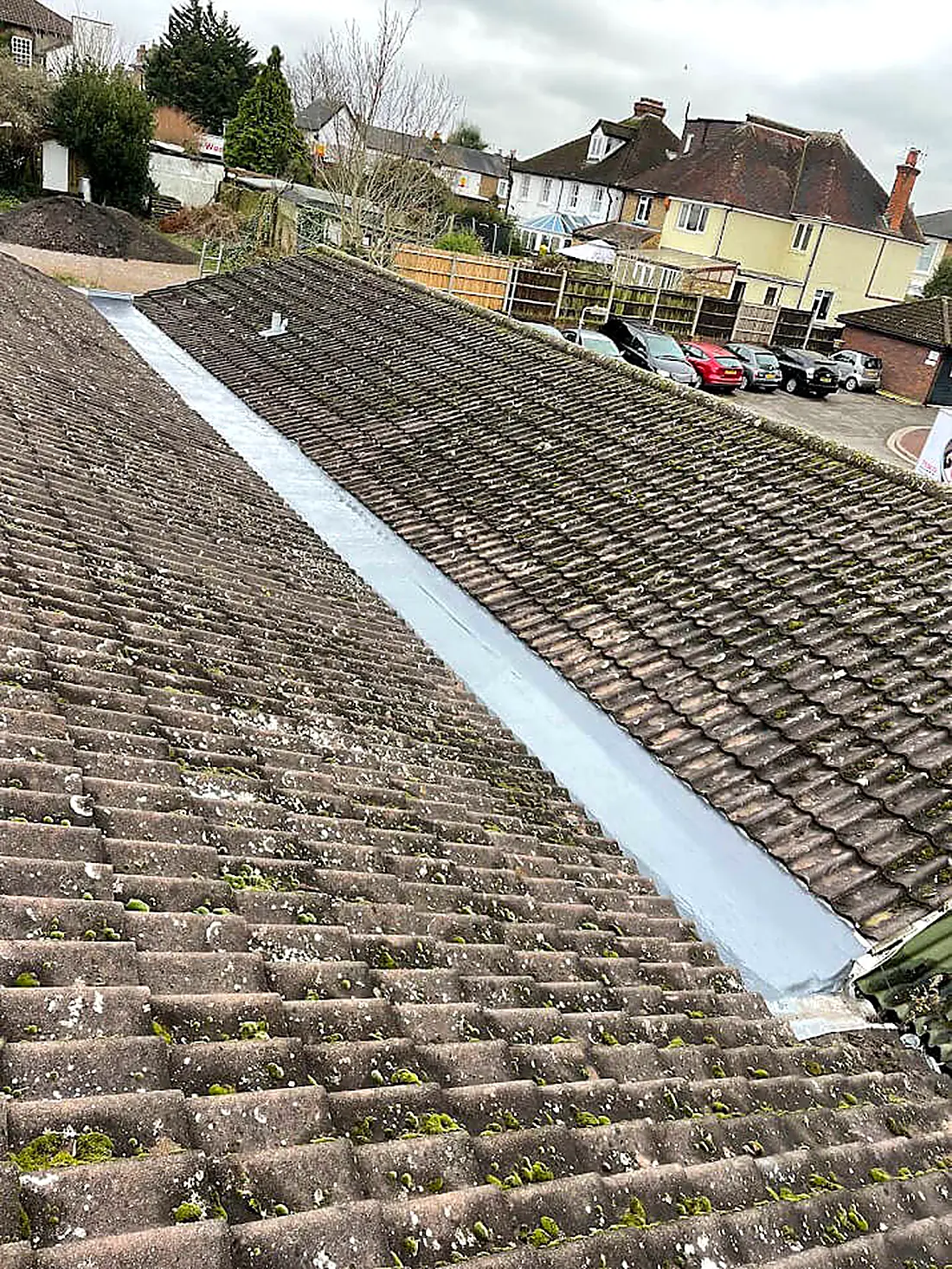
At the open edges we fit drip trims and raised edge trims so water is thrown clear of the fascia instead of tracking back under the roof. Where a flat roof meets a pitched roof, or runs past a chimney, leadwork does the job better than anything else. We carry that out ourselves rather than sending it out.
Rooflights, hatches and anything that breaks the surface
A rooflight turns a dark extension into a room people want to sit in. It also puts a hole in a waterproof surface, so the kerb matters more than the glass. We build the kerb up off the deck, take the covering right up and over it, and let the rooflight sit on top so water cannot get under the frame.
The same goes for soil vents, extract terminals and loft hatches. Anything coming through the roof needs its own detail. Where a previous roofer has sealed a pipe with mastic and hoped for the best, that joint is on borrowed time and it tends to show up in the first hard winter.
Do not judge a flat roof from the ground
Most flat roof problems stay invisible until the ceiling stains. If you can see the roof from an upstairs window, look for standing water, splits at the upstands, moss along the low edge and a blocked outlet. If you cannot see it, we will. Coming out to look costs nothing and there is no obligation.
How we work
Four steps, and no surprises
The same run of events on every job, whether it is one tile or a whole roof.
Ring or email
Tell us what you have noticed. Grant can usually tell from a description whether it is a morning’s work or something bigger, and he will say so.
We come and look properly
We get up on the roof rather than guessing from the drive, and photograph anything you cannot see for yourself.
A written price
Set out clearly, so you can compare it fairly against another quote. Free, and no obligation to go ahead.
Booked in and cleared up
We hold the date as far as the weather allows, sheet up, and the rubbish leaves with us at the end of it.
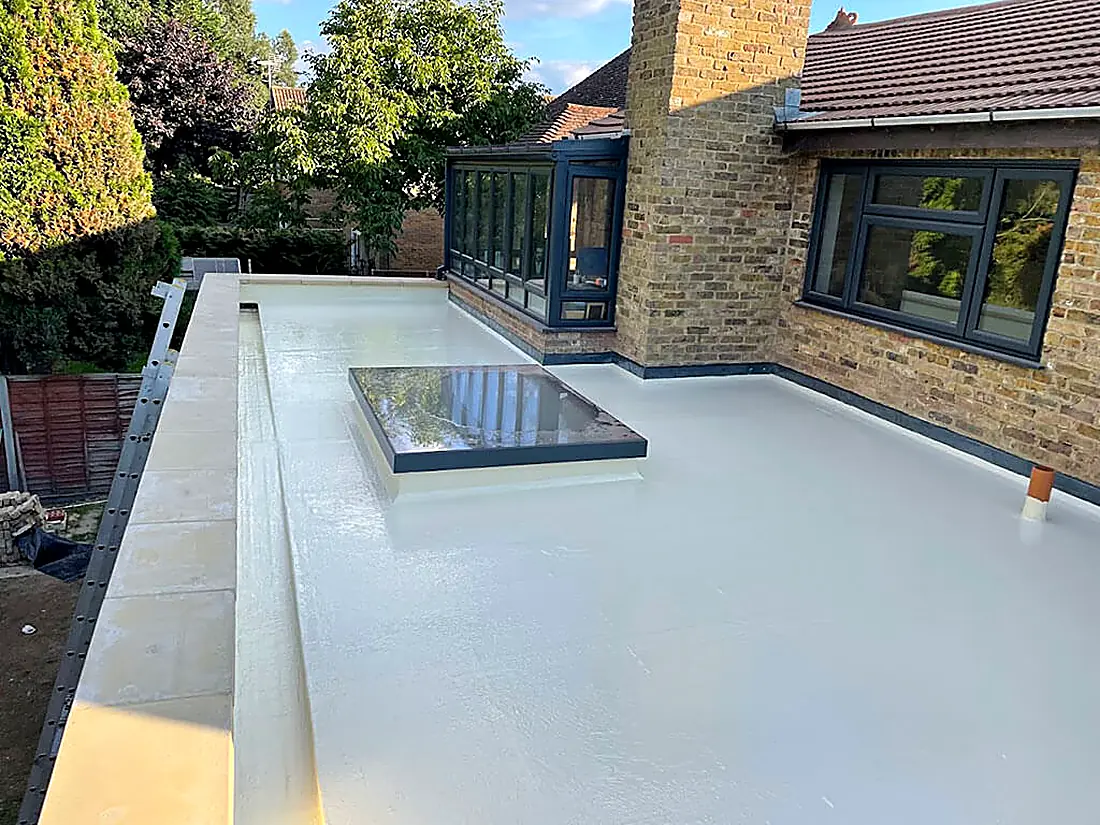
Gallery
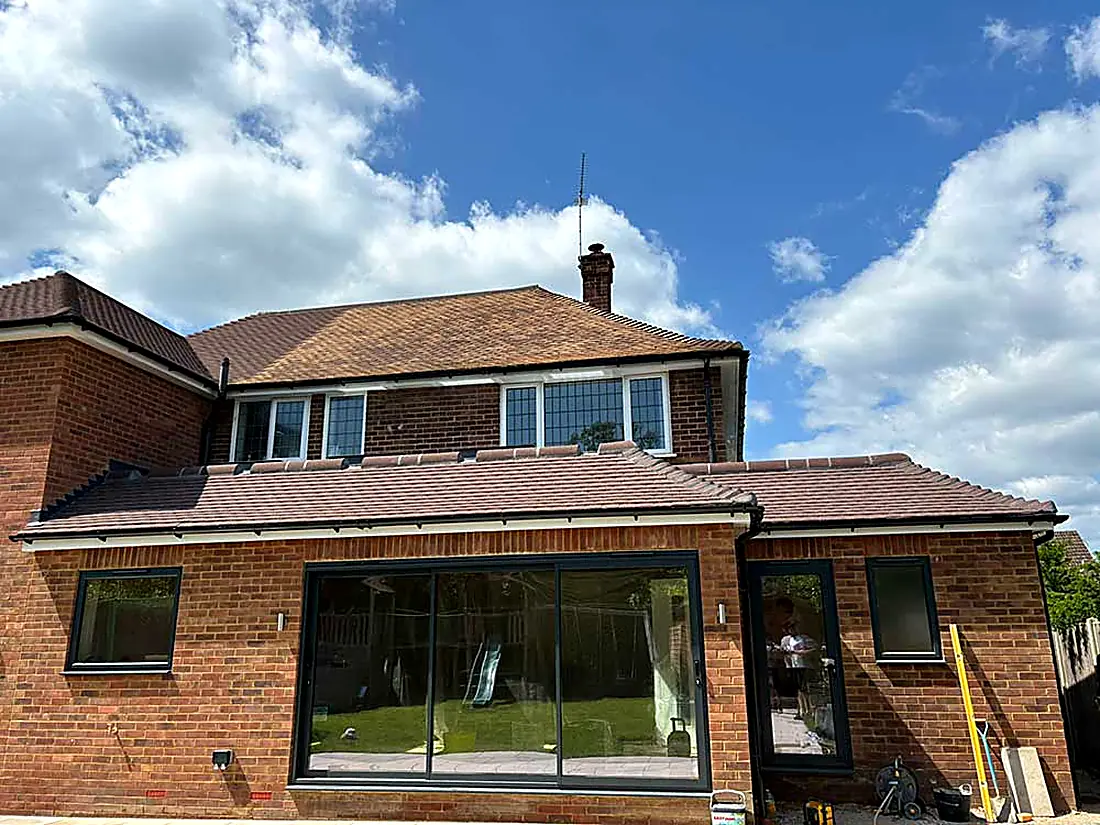
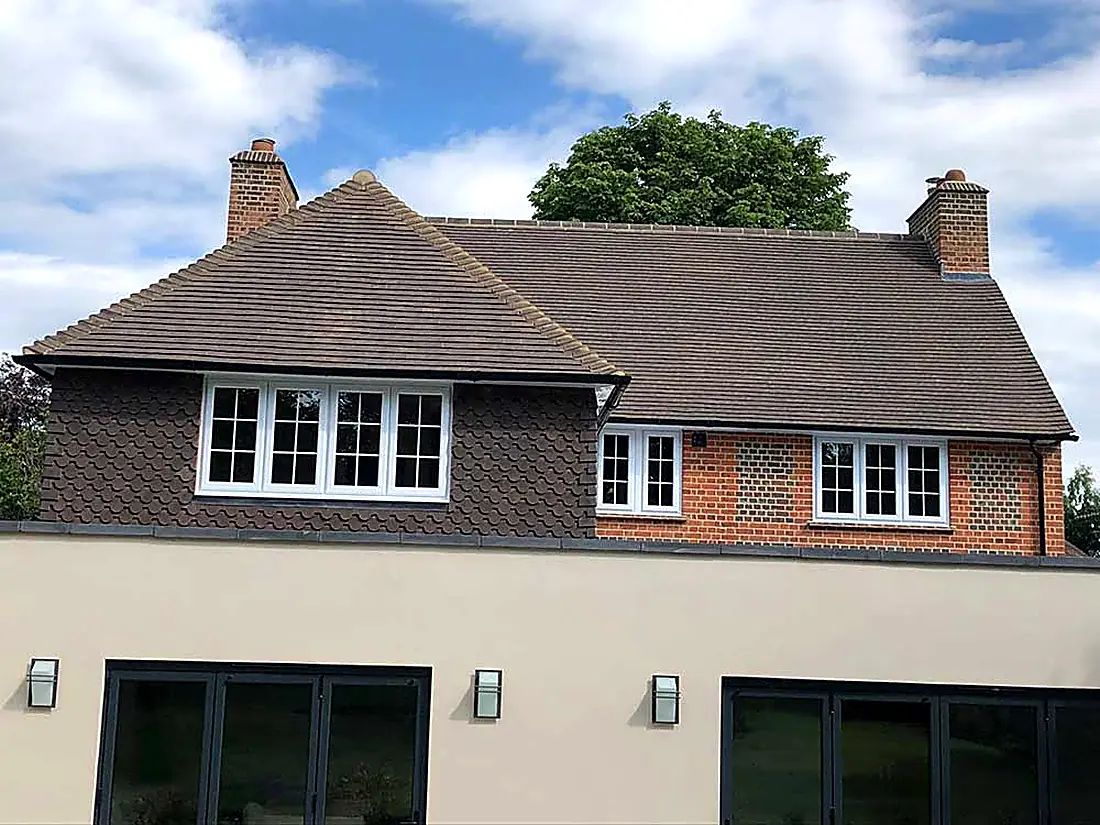
Work we have finished
Questions
Common questions
Fibreglass GRP lasts longest of the three, because it cures into one sheet with no joints to fail, and a well laid one runs for decades. Good three layer torch-on felt gives long service for a lower outlay. Built-up systems last well because there are several bonded layers. Falls and drainage affect all three more than the material itself does.
Fibreglass suits roofs you want to stop thinking about, roofs that get walked on, and roofs where the deck is being replaced anyway. Felt suits garages, outbuildings and larger areas where cost matters, and modern torch-on felt is far better than the thin single layer work that gave felt its name. We look at the deck, the access and the budget, then give you a straight recommendation.
Because the fall is too shallow, the deck has sagged, or the outlet is blocked or set too high. Water still standing two days after the rain has stopped counts as ponding. On fibreglass it is mainly a dirt and moss problem. On felt it works away at the laps and shortens the life of the roof. Finding the cause is cheaper than re-covering twice.
Usually yes. Replacing more than half of a flat roof counts as renovating a thermal element, which normally means the insulation has to be brought up to current standards. That is why a proper price includes insulation and often a slightly thicker build-up at the edges and around any rooflight. We explain that in the estimate rather than after the job has started.
On a warm deck the insulation sits above the decking and below the covering, which keeps the timber warm and dry. On a cold deck it sits between the joists under the deck, and the void above it has to be ventilated at both ends. Warm deck is what we build on new flat roofs. Cold decks are common on older garages and dormers and suffer far more from condensation.
A single garage roof is usually two to three days, depending on the covering and how much decking needs replacing. An extension roof with rooflights, upstands and leadwork takes longer. Weather matters, particularly for fibreglass, which needs dry conditions to cure. We give you a realistic window, work Monday to Friday between 8am and 6pm, and tell you the day before if it has to move.
Often, yes. Splits at an upstand, a lifted lap, a failed trim or a blocked outlet can all be dealt with without touching the rest of the roof. Repairs make sense while the deck is sound and the roof still drains. If the timber has gone soft or there is no fall at all, a patch is money spent twice, and we will tell you that plainly.
Our other roofing services
If your flat roof is leaking, holding water or simply past its best, call Grant on 01932 690 995 or email grant@gbroofingservices.co.uk. We cover Surrey, Middlesex and London, the estimate is free and there is no obligation.