

CHIMNEY REPAIRS
Chimney Repairs in Surrey, Middlesex and London
Repointing, rebuilds, new flaunching, pots, cowls and lead flashing. We put chimney stacks right across Surrey, Middlesex and London, and we sort the roof around them at the same time.
The most exposed part of the house
A chimney takes more weather than any other part of your house. It stands proud of the roof, so wind, rain and frost hit it from every side. That is why stacks are usually the first thing to go. GB Roofing carries out chimney repairs in Surrey and across London, from a morning’s repointing to a full rebuild.
What goes wrong with a chimney stack
Most chimney problems start in the mortar. Rain soaks into the joints, freezes overnight and pushes the mortar apart a fraction at a time. After enough winters the joints go soft, the brick faces begin to flake and water finds a way into the stack. From there it runs down inside the flue or through the brickwork and shows up as a stain on a bedroom ceiling.
The other common failure is the seal between the stack and the roof. If that seal is a sand and cement fillet rather than lead, it will crack. Once it cracks, every shower puts water into the roof timbers below.
- Soft, hollow or missing mortar joints
- Cracked or missing flaunching around the pots
- Loose or leaning chimney pots
- Cracked cement fillets where the stack meets the tiles
- Rusted, slipped or missing flashing and soakers
- Spalled bricks, where the face has blown off
- A stack that leans, or that you can rock by hand
Repointing a stack, and when it needs rebuilding
Repointing means raking the old mortar out of the joints to a proper depth and filling them again with fresh mortar. Done properly it is not a skim over the top. If the old mortar is only scratched back a few millimetres, the new mortar has nothing to grip and it drops out within a couple of years.
The mix has to suit the brick. Old soft bricks on a Victorian house want a softer, more lime based mortar. Put a hard modern mix on them and the mortar survives while the brick faces blow off instead.
Rebuilding is the answer when the brickwork itself has gone. If the faces have spalled away, the stack leans, or the joints are open right through, no amount of pointing will fix it. We take the stack down to a sound course, keep any bricks worth keeping, and rebuild in matching brick with new flaunching and new lead.
STACK REPAIR
How a stack repair runs, in the order it has to happen
Chimney work goes from the top down and in sequence, because each stage covers up the one before it.
Access goes up first
A scaffold with a lift around the stack goes up first. Everything after this stage needs both hands free at the brickwork, which is why nothing on this list can be done off a ladder. The access is priced on its own line so you can see what it costs.
Down to a sound course
The flaunching and pots come off, then any brickwork that has spalled, leaned or opened right through is taken down until we reach courses that are still solid. Bricks worth keeping are set aside for the rebuild.
Repoint or rebuild
Joints are raked out to a proper depth, not scratched back a few millimetres, and filled with a mix that suits the brick. Old soft stock brick wants a softer, more lime based mortar. A rebuild goes back up in matching brick.
New flaunching, pots reset
A fresh sloped bed of mortar is formed on top to hold the pots and throw rainwater off the stack. Cracked pots are changed, and a cowl goes on where a flue needs capping, a bird guard, or help with downdraught.
New lead, then the tiles back
Soakers under each course of tiles, a stepped cover flashing over them, an apron across the front and a back gutter behind. Every tile disturbed for the leadwork goes back before the scaffold comes down.
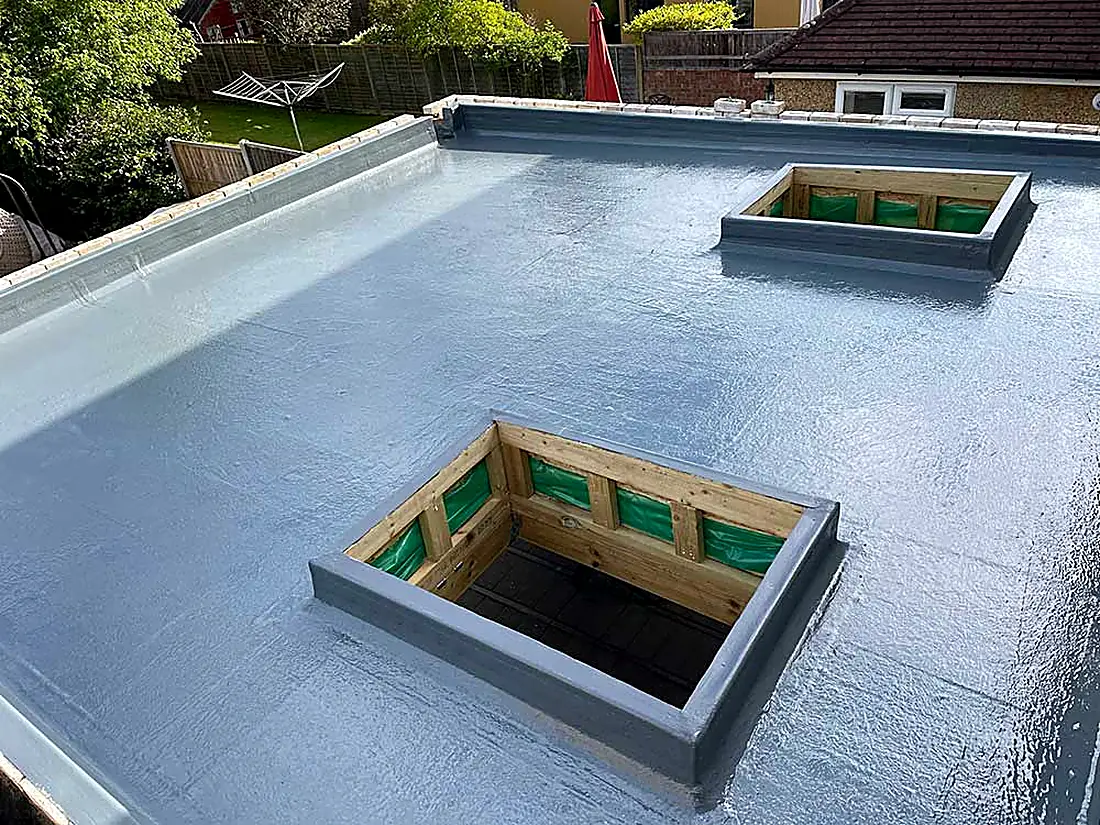
Matching the brick and the mortar
The houses we work on run from Victorian and Edwardian stock brick through 1930s semis to modern estate housing, and they do not all want the same mortar. Old bricks are soft and need a softer mix that lets the joint take the movement and the damp. Put hard cement mortar on soft brick and the joint outlives the brick, which then flakes and blows. We match the brick where we rebuild and mix the mortar to suit what is already there, so a repaired stack does not read as a patch.
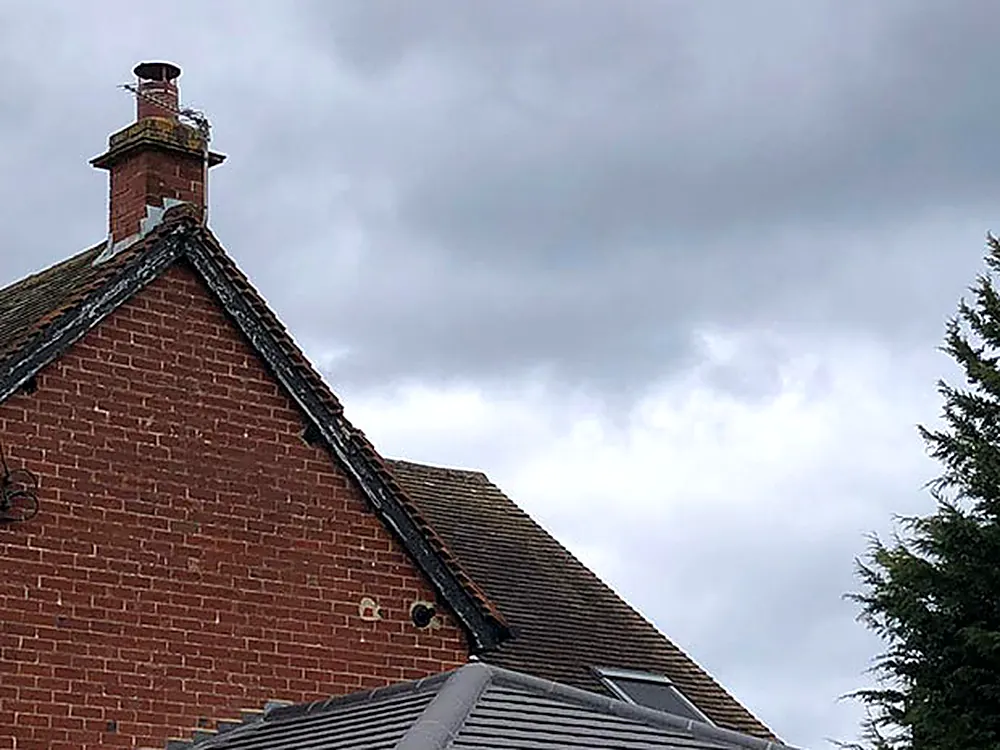
The stack and the roof around it, in one visit
Chimney work almost always disturbs the roof. Tiles come off around the stack to get the soakers in, the tiling behind has to be lifted for the back gutter, and there is usually a cracked or slipped tile waiting to be found once the scaffold is up. Because we are roofers first, we deal with all of it while the access is there. You are not left waiting for a second trade to come and finish off around the brickwork.
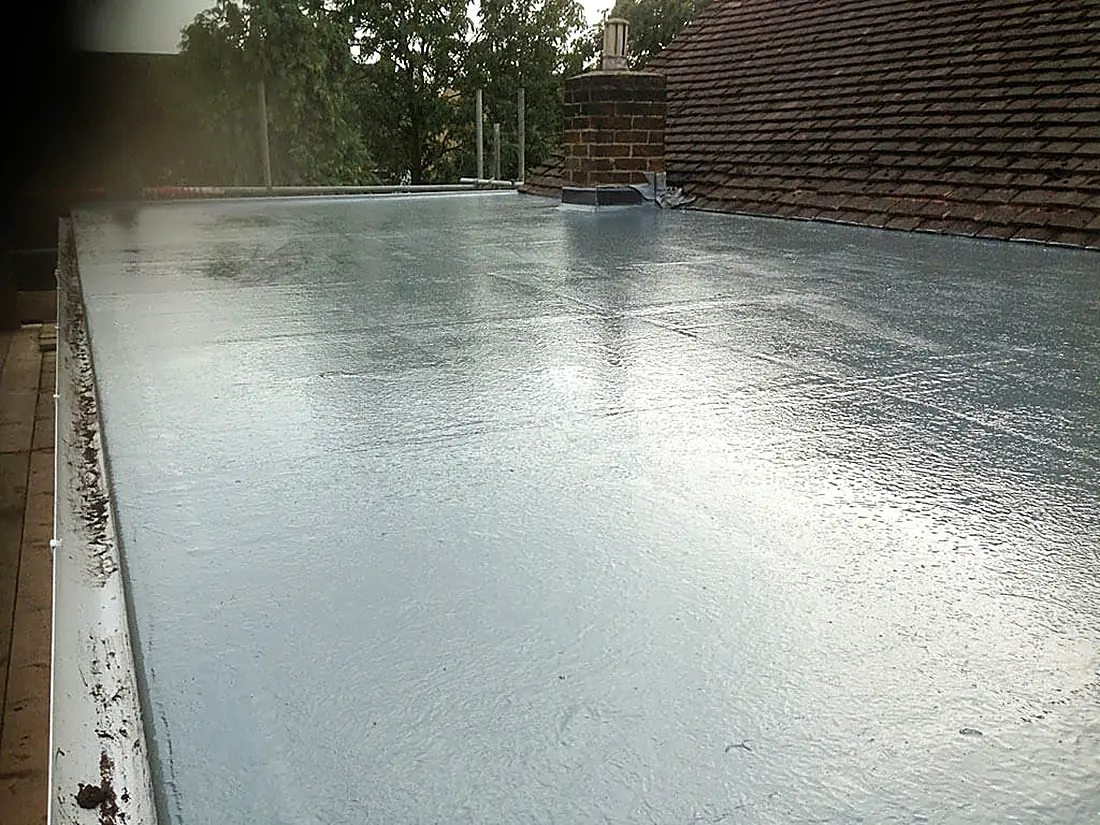
Free estimates, and every job guaranteed
We come out and look at the stack properly before quoting, and the estimate is free with no obligation. Every new project we take on is backed by a full guarantee. We work across Surrey, Middlesex and London, including Addlestone, Weybridge, Cobham, Woking, Chertsey, Esher, West Byfleet, Oxshott, Lightwater and Bagshot. Quality at prices that aren’t through the roof.
Flaunching, pots and cowls
Flaunching is the sloped bed of mortar on top of the stack that holds the pots in place and throws rainwater off. It is a wearing part. It cracks, it lets water sit, and in the end it lets go of the pot.
If it is only hairline cracked we cut it out and re-form it in one visit, resetting the pots while we are up there. If a pot is cracked, or the wrong size for what you burn, we will change it. Pots come in plenty of shapes and it is usually possible to match the ones already on your stack or on the houses either side.
Cowls sit on top of the pot and each does a different job. A rain cowl or capping cowl keeps water out of a flue you no longer use. A bird guard stops jackdaws nesting, which is a regular cause of blocked flues in the Surrey villages. An anti-downdraught cowl helps where smoke keeps blowing back into the room. We will tell you which one you actually need rather than fitting one to every pot.
Flashing, soakers and where the leaks really start
Plenty of the leaks we are called to are blamed on the chimney when the real fault is the joint between the chimney and the roof. That joint is made in lead. Along the front there is an apron. Up each side there are soakers under every tile or slate with a stepped cover flashing over the top. At the back there is a back gutter.
If any of that is missing, or has been replaced with a mortar fillet, water will get in. Mortar cannot move with the building and lead can, which is why a fillet always cracks first. We strip out the failed work and dress new lead in properly, chased into the joints and wedged, not simply stuck on the surface.
We do all our own leadwork, so a leaking chimney does not need two trades and two separate visits.
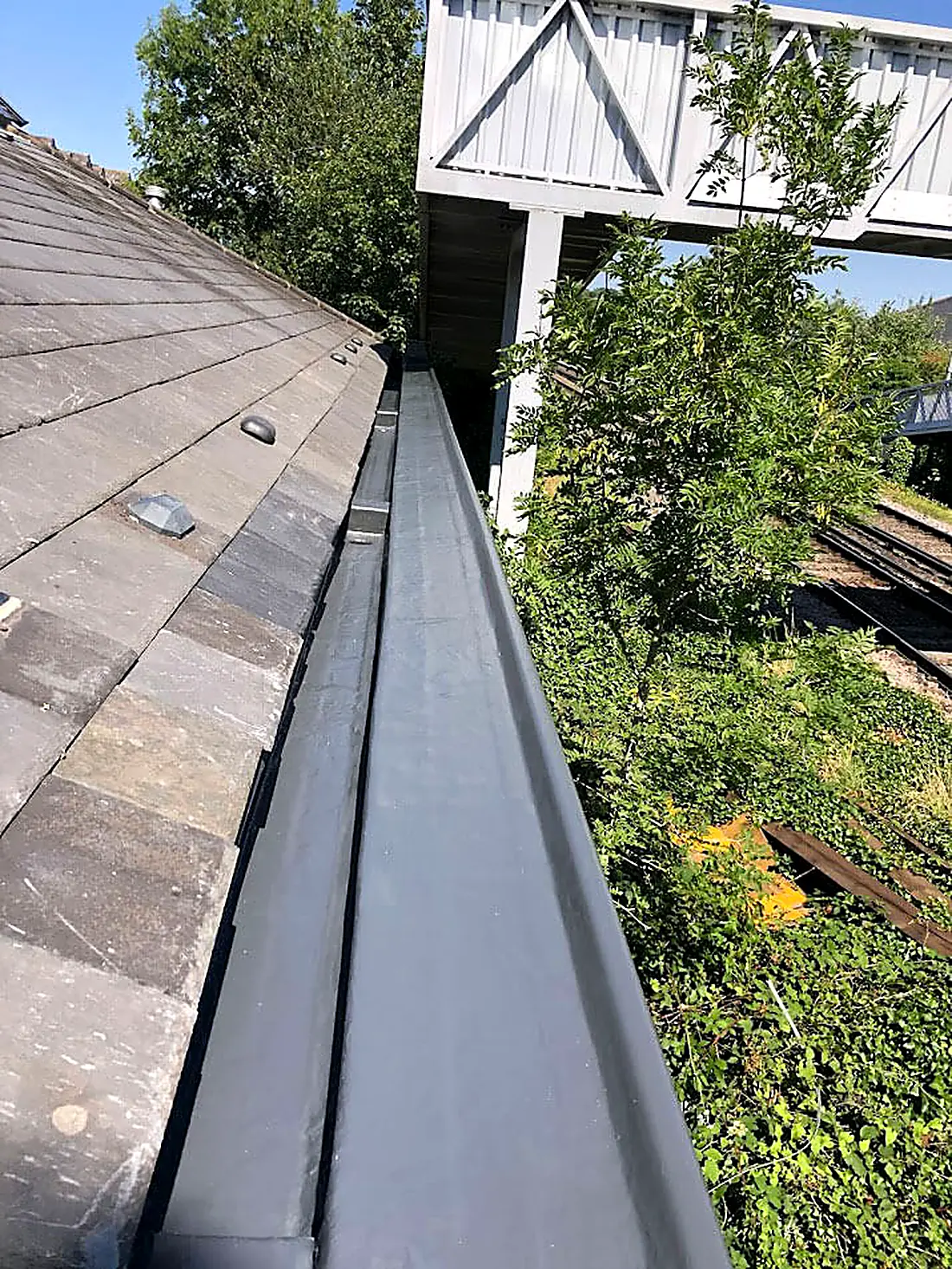
Damp on a chimney breast
Damp patches on a chimney breast nearly always come from above, not below. Water gets in through open joints, failed flaunching or broken flashing, soaks down through the stack and appears on the plaster in the room. It usually shows as a brown or yellow tide mark that darkens after heavy rain and dries out slowly afterwards.
Two other causes are worth knowing about. A flue that has burned coal can leave salts in the brickwork that pull moisture out of the air and stain plaster even after the roof is watertight. And a fireplace blocked up with no ventilation holds damp air inside the flue with nowhere to go. If we find either, we will say so, because replastering before the roof is sorted is money thrown away.
Capping off or taking down a disused stack
If nobody uses the fire any more you have three sensible choices. Keep the stack and maintain it. Cap it off. Or take it down.
Capping off means sealing the top of the flue against rain while still letting it breathe. A capping cowl or vented cap does that. The flue needs a little airflow, top and bottom, or the moisture already in the brickwork stays put and you get damp inside instead of out.
Taking a stack down is a bigger piece of work. It can come off to just below the roof line and be tiled over, which leaves a clean roof and nothing left to maintain, or come down further if you want the chimney breast out of a bedroom. That is structural and needs thinking through. On a semi or a terrace the stack is usually shared, so your neighbour needs to be part of the conversation.
Access, scaffolding and how long the work takes
Some chimney work can be done safely off a ladder and a roof ladder. Most cannot. Anything that means standing at the stack, taking bricks off or handling pots needs a proper working platform, which normally means a scaffold with a chimney lift around the stack.
That is not cost for the sake of it. Nobody rebuilds a stack one handed off a ladder, and the scaffold is what lets the job be done properly and safely. We price the access separately in the estimate so you can see exactly what you are paying for.
As a rough guide, repointing a stack and renewing the flaunching is often a day or two. A full rebuild with new lead runs to two to four days. Weather moves those dates more than anything else, because fresh mortar and freshly dressed lead both want a dry spell.
What you can check from the ground
Stand back across the road with a pair of binoculars on a bright day. Look for a lean in the stack against the line of the house. Check the mortar bed around the pots for cracks or a gap where it has parted from the brick. Look for a dark stain on the tiles running down from the stack, and for crumbs of mortar or brick sitting in the gutter below. Any of those is worth a phone call before the next spell of bad weather.
How we work
Four steps, and no surprises
The same run of events on every job, whether it is one tile or a whole roof.
Ring or email
Tell us what you have noticed. Grant can usually tell from a description whether it is a morning’s work or something bigger, and he will say so.
We come and look properly
We get up on the roof rather than guessing from the drive, and photograph anything you cannot see for yourself.
A written price
Set out clearly, so you can compare it fairly against another quote. Free, and no obligation to go ahead.
Booked in and cleared up
We hold the date as far as the weather allows, sheet up, and the rubbish leaves with us at the end of it.
Gallery
Work we have finished
Questions
Common questions
There is no standard price, because access drives the cost more than the brickwork does. Getting a scaffold up around a stack is often the single biggest item on the estimate, and a three storey house costs more to reach than a bungalow. After that it depends on whether the stack needs repointing, new flaunching, new lead or a full rebuild. We look at it in person and give you a free written estimate with no obligation.
Most chimney repairs take between one and four days on site. Repointing a stack and renewing the flaunching is often a day or two. A full rebuild with new lead flashing usually runs to two to four days. Allow a day either side for the scaffold to go up and come down. Wet weather is the main thing that pushes those dates, because fresh mortar and newly dressed lead both want a dry spell.
For most chimney work, yes. Anything that means standing at the stack, handling pots, cutting out flaunching or taking bricks down needs a proper working platform, and that means a scaffold with a lift around the chimney. Smaller jobs, such as a single slipped tile beside the stack, can sometimes be done from a roof ladder. We tell you which your job needs before you commit, and the access is priced separately so you can see it.
Nearly always because water is getting in at the top. Open mortar joints, cracked flaunching or failed flashing let rain into the stack, and it soaks down through the brickwork until it reaches plaster you can see. The giveaway is a brown tide mark that darkens after heavy rain. Two other causes exist: salts left in the brickwork by an old coal fire, and a fireplace blocked up without ventilation. Sort the roof first, then replaster.
Repair it if you still use the fire, or think you might want to. Taking a stack down is permanent, it changes the look of the house, and on a semi or a terrace it usually involves your neighbour because the stack is shared. If the flue is dead and the stack is in poor condition, removing it to below the tiles and roofing over leaves nothing to maintain. Capping it off sits in between the two.
A stack is unsafe if it leans, if you can rock the pot or the top courses by hand, or if brick faces have blown off and left the wall thin. Mortar you can pull out with a finger is another warning sign. From the ground, look for a visible tilt, a gap under the flaunching, and lumps of mortar or brick on the roof or in the gutter. If you see any of that, keep clear of the area below and call us.
Most stacks want repointing every 20 to 30 years, though an exposed one on a hill or facing the prevailing wind can need it sooner. It is not a fixed schedule. What matters is the state of the joints. If the mortar is set back from the face of the brick, sounds hollow when tapped or crumbles when you scratch it, it is due. Repointing at the right time costs far less than rebuilding a stack that has been left.
Our other roofing services
If your stack is looking tired, or there is a stain on the ceiling you cannot explain, give Grant a ring on 01932 690 995 or email grant@gbroofingservices.co.uk. We will come out, have a proper look and give you a free estimate.